With the FTA becoming effective, farmers are hopeful of better export volume and better production on the agricultural front. Photo courtesy: Karthikeyan ji.
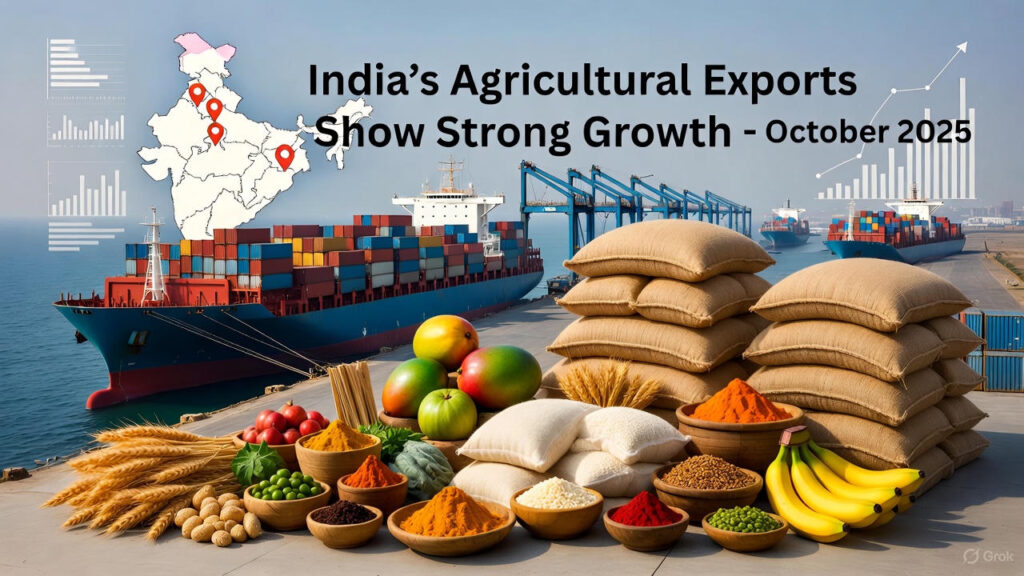
The free trade agreement with the European Union will benefit exports of Indian agricultural products such as table grapes, cucumbers, coffee and tea. Agricultural stakeholders said the reduction in tariffs would not only help expand markets in Europe but also help them compete effectively with producers in other geographies.
“We are paying 8 per cent duty on grape exports. If it is reduced, it will be a big boost for Indian grape shipments,” said Vilas Shinde, chairman and managing director of Sahyadri Farms, the country’s largest exporter of table grapes. India’s table grape shipments to Europe have crossed ₹3,000 crore, Shinde said, adding that he expects better export volumes and better production on the agriculture front with the FTA coming into effect.
Similarly, cucumber exporters also said they would benefit from the FTA. “This is a huge boost for us. We will be able to compete with Turkey and some Eastern European countries and even Germany,” said Vinod, GM of the Indian Gherkin Exporters Association. Currently, India’s cucumber exports attract about 14.4 per cent duty to Europe, while competitors like Türkiye attract zero duty.
The FTA with EU is a big boost for the Indian cucumber industry, especially, when the US has imposed tariffs. Vinod said, Europe is a very big market and about 35 to 40 percent of cucumbers are being exported to Europe.
soluble coffee
“Our soluble coffee will benefit if the tariff is reduced,” said Ramesh Raja, president of the Coffee Exporters Association. Green coffee shipments to the EU, the largest destination for Indian shipments, are already exempted from any tariffs.
“India-EU FTA could boost India’s agricultural exports, but benefits will be concentrated in high-value, standards-compliant products and will be successful only with strong domestic policy support,” said Parsharam Patil, agro-economist and member, APEDA.
Trade expert S Chandrasekaran said, “India’s agri and processed food sectors are set to receive a transformative boost under the India-EU FTA, creating a level playing field for Indian farmers and agri-enterprises. Key commodities such as tea, coffee, spices, fresh fruits and vegetables and processed foods will gain competitiveness, strengthen rural livelihoods, promote inclusive growth and strengthen India’s position as a reliable global supplier. India has also prudently targeted sensitive sectors including dairy, grains, poultry, etc. Soymeal, some fruits and vegetables, balancing export growth with domestic priorities.”
Srinivas Kuchibhotla, Partner, Deloitte India, said, “While the FTA opens up growth opportunities for value-based agri exports, the benefits ultimately achieved will depend on aligning trade policies with reforms on the policy front by strengthening FPOs, easing credit access and building certification and traceability infrastructure as well as last-mile quality, so that Indian exporters can keep an eye on high-value EU imports in the face of increasing competition, where globally “Charges are reduced from competitive geographies.”
Kuchibotla said, “By adopting a holistic approach, about $ 2.5-3.5 billion worth of agri-food exports can be achieved through this agreement, which will take India-EU trade to $ 7-8 billion.”
Kuchibotla said Indian exports of food and beverages to the EU were about $4.2 billion in 2024, with total exports of seafood, spices and agri-foods coming from the EU to India at about $1.5 billion, underscoring both geographical demand and potential untapped export/import opportunities.
However, the impact on the tea industry is unclear. “The European Union is an important market for Indian tea, especially for Assam and Darjeeling orthodox. Tariffs have not been an issue for us. The real problem is that they (EU) have banned the use of certain chemicals in tea. And without those chemicals, it is not possible to export now. So there may be some benefit from the FTA, but exports to Europe are likely to fall rather than increase. The Chief Secretary of Assam has given a representation to the Commerce Minister. But can this matter be taken up? I don’t have clarity on whether there will be discussions with the EU team during this visit,” said Hemant Bangur, president of the Indian Tea Association.
(With inputs from Mithun Das Gupta in Kolkata)
Published on January 27, 2026