Commerce Minister Piyush Goyal stressed that India has fully protected sensitive agricultural and dairy products such as maize, wheat, rice, soya, poultry, milk, cheese, ethanol, tobacco, some vegetables and meat. | Photo Credit: ANI
India has fully protected sensitive agricultural and dairy products such as maize, wheat, rice, soya, poultry, milk, cheese, ethanol (fuel), tobacco, some vegetables and meat, as no duty concessions are given to the US on these items under the trade agreement.
India and the US announced on Saturday that they have reached the framework of an interim trade agreement. Under this, America will reduce the tariff on Indian goods from the earlier 50 percent to 18 percent.
farmers were protected
“This agreement reflects India’s commitment to safeguard the interests of farmers and sustain rural livelihoods by fully protecting sensitive agricultural and dairy products including maize, wheat, rice, soya, poultry, milk, cheese, ethanol (fuel), tobacco, certain vegetables and meat,” Commerce and Industry Minister Piyush Goyal said in a social media post.
These goods are sensitive as it involves the livelihood of small and marginal farmers of the country.
Even in other free trade agreements (FTAs), India has not given any import duty concessions on sensitive agricultural and dairy products. It has recently finalized FTAs with the EU, UK and Australia.
rural economy
Agriculture and allied activities such as animal husbandry form the backbone of India’s rural economy, providing employment to more than 700 million people. Unlike developed economies, where agriculture is highly mechanized and corporatized, in India it is a livelihood issue.
India’s agricultural sector is currently protected by moderate to high tariffs or import duties and regulations to protect domestic farmers from unfair competition.
US agricultural exports to India were worth US$1.6 billion in 2024. Major exports include almonds (in shell, US$868 million); Pistachios (US$121 million), Apple (US$21 million), Ethanol (ethyl alcohol, US$266 million).
Given that more than 50 percent of India’s population depends on agriculture for its livelihood, India considers the entire sector as vulnerable. Import or customs duties are particularly important for staple crops, dairy and key agricultural products that sustain rural livelihoods.
agricultural export
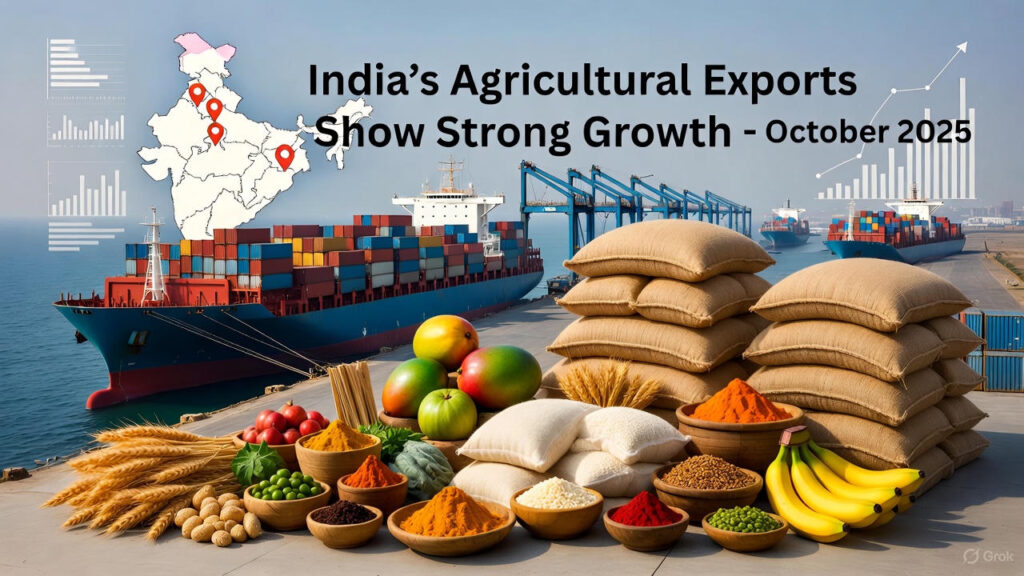
In FY2015, India’s total agricultural exports were projected to grow from US$45.7 billion to over US$51 billion in 2023–24, a portion of which went to the US (US$5 billion). India’s total exports in FY25 stood at US$437 billion.
India aims to reach combined exports of agriculture, marine products and food and beverages to US$100 billion in the next four years. Main exports include tea, coffee, rice, some cereals, spices, cashew nuts, oil meals, oilseeds, fruits and vegetables.
According to a joint statement issued by the two countries, India will eliminate or reduce tariffs on a wide range of US food and agricultural products, including dry distillers’ grains, red sorghum for animal feed, tree nuts, fresh and processed fruits, soybean oil, wines and spirits and additional products.
Published on February 7, 2026