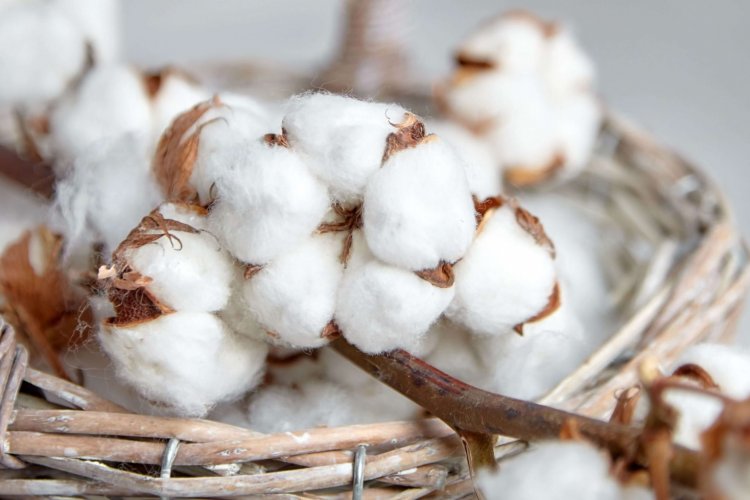
In the last 16 months, India has imported 7.6 million bales of cotton worth Rs 21,000 crore, of which a significant portion is medium and short staple lint cotton produced domestically. There was a sharp increase in imports after the import duty was removed. This has created serious pressure on the cotton farmers, the Minimum Support Price System and the financial position of the Cotton Corporation of India.
Over the past 16 months, India’s cotton economy has witnessed two parallel and contradictory developments. On the one hand, a cotton mission was announced in the Union Budget 2025-26 aimed at reviving domestic production, which has declined by about 25 per cent over the past decade. On the other hand, cotton imports have increased rapidly, raising concerns among farmers and trade experts.
Between October 2024 and January 2026, India imported 7.6 million bales of cotton, each weighing 170 kg, worth about Rs 21,000 crore. Of this, 4.3 million bales were imported during the cotton year 2024-25, while 3.3 million bales were brought during the first four months of the current cotton year, October 2025 to January 2026.
Duty-free window triggers import spike
Industry sources attribute the increase to the government’s decision to temporarily abolish import duty. On August 19, 2025, the government allowed duty-free cotton imports till September 30. However, within ten days, the window was extended to December 31, 2025.
According to trade representatives, this expansion resulted in imports far in excess of immediate requirements. Times are being tested, especially as domestic production remains under pressure.
Difference between decline in production and increase in consumption
The government estimates cotton production for 2025-26 at 29.2 million bales. Industry estimates place annual domestic consumption at between 31.5 to 33 million bales, indicating a structural shortfall.
according to Cotton Association of IndiaProduction reached 39.8 million bales in 2013–14. Since then, yields per hectare have declined steadily. In 2025-26, the acreage has also declined due to pest attacks and uneconomic prices in previous crop years.
Of the 7.6 million bales imported in 16 months, about 1.2 million tonnes included medium and short staple lint cotton, worth Rs 18,350 crore. This variety is produced domestically. An additional 88,500 tonnes of extra-long staple cotton worth Rs 2,650 crore was imported. Extra-long staple cotton is not widely produced in India and has duty-free status.
India-US trade agreement adds new uncertainty
Concerns have intensified following the India-US trade agreement and its subsequent interim framework announced on February 2. Statement of Union Commerce Minister Piyush Goyal There are indications that there may be duty concessions on cotton imports from the US, possibly even zero duty.
The market reaction has been swift. After the trade deal announcement, US cotton prices rose by Rs 1,500 to Rs 1,800 per candy. Analysts attribute this to expectations of duty-free access to the Indian market.
Currently, African cotton is priced at around Rs 61,000 per candy, while potentially duty-free US cotton could fetch around Rs 57,000 per candy in India. Trade experts argue that Indian mills can benchmark US cotton prices against the selling price Cotton Corporation of India and duty-inclusive imports from Africa and Brazil.
Major US exporters expected to benefit include commodity trading giants Archer Daniels Midland, banj, KargilAnd Louis Dreyfus CompanyCollectively known as ABCD companies.
Pressure on CCI and farmers
Cotton Corporation of India purchases cotton at minimum support price to protect the income of farmers. Last season’s MSP cost was Rs 59,700 per candy, and CCI has almost completed the sale of about 9.4 million candies from the old stock.
After removal of duty, domestic cotton prices fell from around Rs 60,000 per candy to Rs 52,000-53,000. For 2025-26, the MSP implies a cost of Rs 61,900 per candy for CCI. Considering the current market price of Rs 52,000-54,000 per candy, the agency may once again incur losses.
Many farmers have already sold their produce below the MSP this season, indicating a growing crisis in cotton-growing areas.
Bangladesh and Australia factors
The dynamics of India’s cotton trade have become more complex due to developments in neighboring markets. India exports cotton and yarn worth about $4 billion to Bangladesh annually. However, following a trade agreement between Bangladesh and the United States, US cotton exports to Bangladesh may increase, while Bangladeshi textile products may get duty-free access to the US market.
Additionally, India’s trade agreement with Australia allows duty-free import of 300,000 bales of high-quality long-staple cotton.
While duty-free imports may provide marginal cost benefits to sections of the textile industry, experts argue that the primary beneficiaries are likely to be multinational trading firms rather than farmers.
Cheap imports could put downward pressure on domestic prices, weaken the effectiveness of the cotton mission and deepen financial stress among cotton growers. As production stagnates and imports increase, the region stands at an important crossroads.