India’s agricultural research system needs a clear five-year roadmap to integrate artificial intelligence into research, education, extension and governance. With initiatives like Bharat-Vistaar gaining momentum, strengthening data systems, human capacity, partnerships and regulatory safeguards will be key to making India a global leader in farmer-centric agri-AI.
The recently concluded AI Impact Summit marked an important milestone, deliberating on the challenges and opportunities of responsible and transformative artificial intelligence. The participation of eminent heads of state, leading industry innovators, investors and global academia demonstrated that AI is no longer a peripheral technology, but central to economic growth, governance and sustainability. The summit deliberated on global best practices across sectors including health, education and agriculture. Several cutting-edge AI products were also launched during the summit.
An important development during this period was the launch of Bharat-Vishart by the Agriculture Minister in Jaipur on 17 February 2026, soon after its announcement in the Union Budget on 1 February 2026. The quick launch of this initiative demonstrates India’s readiness to harness the power of AI tools in the agriculture sector. This clearly shows that India is not just a consumer of AI technologies, but is establishing itself as an active innovator in applying AI to increase productivity, enhance market intelligence and improve the welfare of farmers by promoting sustainable practices.
To fully harness the transformative and dynamic potential of AI, the agricultural research system needs to position itself by developing a comprehensive and visionary strategy. AI should be incorporated not only in research laboratories but across the entire ecosystem—research, education, extension, governance and market relations. A clear five-year vision with an actionable roadmap is a prerequisite for effective implementation and measurable results. The National Agricultural Research System may consider the following aspects for in-depth discussion and strategic planning:
Innovation: Expand the boundaries of agricultural-AI research
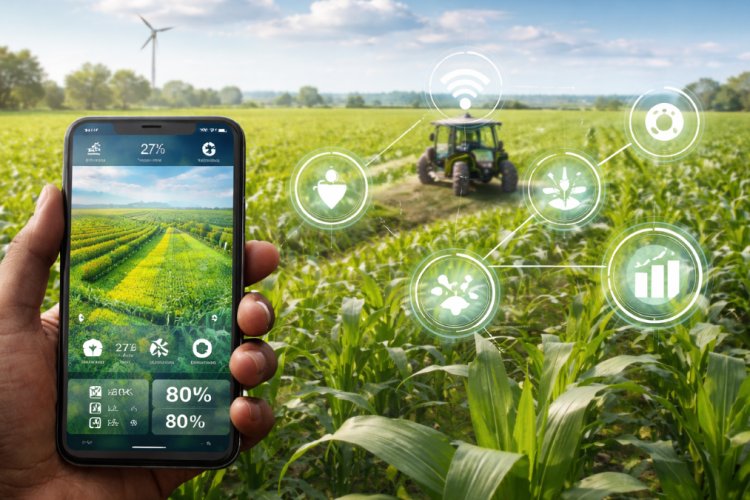
The top priority is to explore areas of innovation in various disciplines using AI technologies. Agricultural research institutions should actively identify new avenues of research to develop agricultural technologies. Some examples include: (i) AI-powered genetic engineering, crop modeling and yield forecasting, (ii) precision agriculture, focused on nutrient and water management, (iii) pest and disease detection, (iv) climate risk prediction and adaptation planning, (v) livestock health monitoring using sensor-based diagnostics and remedial measures, (vi) robotics and automation of farm machinery, and (vii) AI-based market intelligence and price forecasting.
A national-level agriculture-AI research and innovation mission could be established to support multi-disciplinary, multi-institutional research projects that integrate disciplines such as breeding, agronomy, plant protection, data science, engineering, remote sensing, robotics and economics. The competitive grant will encourage the scientific community to contribute solutions tailored to smallholder farmers.
Research priorities should be in line with the needs of farmers across eco-regions and commodities. Priorities can be derived from an excellent exercise conducted under Vikas Krishi Sankalp Abhiyaan During May-June 2025. Pilot projects should be undertaken for scalability and cost-effectiveness before launching across the country.
human resource development
The adoption of AI tools in agricultural research and agriculture will highly depend on human capacity. A detailed program for capacity building can be developed at several levels:
(A) researcher: Scientists in agricultural research institutions require training in AI tools, machine learning models, data analytics and computational techniques. Multidisciplinary research teams can be identified in different problem areas to (i) develop their expertise in using AI and AI tools, and (ii) build a human resource pool for future leadership.
(B) extension worker: Extension workers are the link between the research system and the farmers. They should be trained to interpret AI-based advisories and communicate effectively to farmers in local languages. Multilingual apps (like Sarvam) need to be integrated with such programs for effective technology dissemination.
(C) teacher and student: Agricultural universities should revise their curriculum to integrate AI tools in subjects like breeding, agronomy, horticulture, plant protection, soil science, agricultural economics and animal science. New degree programs or special courses in agri-informatics and AI-enabled agriculture can be launched to enable teachers and students to fully leverage the power of AI.
Given the rapid development of AI technologies, skilling and re-skilling are essential. A structured Lifelong Machine Learning (LML) mechanism should be institutionalized within the national agricultural research system. Regular online refresher courses and certificate programs can be offered by dedicated institutions (such as the National Academy of Agricultural Research Management (NAARM) or the Indian Agricultural Statistics Research Institute (IASRI)), which can ensure continuous learning of new tools, models and techniques.
The need for capacity development for all stakeholders including researchers, extension workers, policy makers, agri-entrepreneurs and farmers should be assessed to design targeted capacity development modules.
data infrastructure
Data is the foundation of any AI system. Agricultural research institutes generate large amounts of data on crop varieties, soil health, water management, weather patterns, pest occurrence, input use, management practices, climate change and yields of various crops. However, much of the data collected and maintained is fragmented, unstructured or inaccessible. A strong data governance system is required to: (i) standardize data collection protocols, (ii) ensure data quality, (iii) develop a well-managed data repository, and (iv) facilitate secure data sharing mechanisms across institutions.
There is a need to set up dedicated centralized and regional data centers with cloud-based infrastructure. There is a need to develop protocols for clear guidelines on data ownership, consent and ethical use, which are essential to build trust among stakeholders.
Partnership and Ecosystem Integration
AI in agriculture cannot be implemented in silos. There is a need for a partnership approach that integrates research institutes, agricultural universities, technology providers. Agricultural Science CenterStartups, farmer-producer organizations (FPOs), financial institutions and insurance providers. Public-private partnerships can accelerate technology development and diffusion. Private sector experts can be identified who can provide AI expertise and platforms, while research institutions and extension systems (e.g. Agricultural Science Center) Generate and share information on crop varieties and management practices, animal health and field-level conditions.
It would be appropriate to establish a national level Agri-AI consortium to coordinate multi-disciplinary and multi-institutional research and avoid duplication of efforts. International partnerships can be explored that can facilitate access to global datasets, advanced tools and best practices.
investment and resource mobilization
Becoming a global leader in Agri-AI will require substantial investment. A detailed assessment is required on additional financial, infrastructural and human resource requirements. Investments are needed to develop: (i) digital infrastructure in research institutes and agricultural universities, (ii) high performance computing facilities, (iii) training programs and curriculum changes, (iv) research grants and innovation funds, and (v) pilot demonstration and upgradation programs. Therefore, dedicated funding windows can be created for AI-based initiatives.
regulatory framework
The rapid expansion of AI applications requires a strong regulatory framework. In agriculture, wrong advice can adversely affect the livelihood of farmers. There may be rapid growth of advisory services in the agricultural sector. Therefore, a regulatory framework for AI-based agricultural advisory should be developed to address the following: (i) verification and certification of AI-based advice, (ii) transparency in decision making, and (iii) accountability for errors. A regulatory body or certification mechanism could be set up to filter technologies and information, ensuring that only scientifically validated AI solutions reach farmers.
Managing the risks of misinformation
One of the key challenges in the AI era is the risk of misinformation. Farmers may receive contradictory or incorrect advice from unverified platforms. Misleading materials, faulty crop recommendations, or inaccurate weather forecasts can lead to significant losses. To mitigate these risks, official AI advice should be branded and certified. A grievance redressal mechanism should also be established. An innovative idea worth exploring is an insurance mechanism that compensates for losses resulting from certified AI advisor errors. This will increase trust and accountability in AI systems.
Policy integration in research, extension, teaching and governance
Adoption of AI in the national agricultural research system should be mainstreamed in all functional domains of research, extension, education and governance. In research, AI-driven experimentation, modeling and predictive analytics should be encouraged. On extension, personalized real-time advice should be developed through mobile apps. In education, integrating AI tools into practical training and curriculum development should be a regular practice. In governance, AI-based monitoring, resource allocation and impact assessment of programs should be an integral part of the system. It would be worthwhile to develop an integrated national policy framework for Agri-AI that provides clear guidelines for implementation, funding, monitoring and evaluation.
Over the next five years, India has an opportunity to establish itself as a global leader in Agri-AI. By aligning research priorities with farmers’ needs, strengthening institutional capacities, and ensuring responsible AI deployment, agricultural research systems can become more efficient, inclusive, and resilient. This is the most opportune time to develop a roadmap and implement the agriculture-AI approach through coordinated efforts to improve the efficiency of the national agricultural research system.
(PK Joshi is the President of the Agricultural Economics Research Association and the Vice President of the National Academy of Agricultural Sciences.)