The escalating conflict with Iran has disrupted India’s basmati rice exports by nearly 70%.
The escalating conflict between the United States, Israel and Iran has dealt a serious blow to India’s basmati rice exports, the majority of which is destined for the Middle East. With export routes disrupted and shipments halted, traders have warned that domestic basmati prices may come under pressure in the coming weeks. Exports of non-Basmati rice to African markets may also be affected due to logistics disruptions.
India exports about 6 million tonnes of basmati rice annually, of which about 70% – about 4 to 4.2 million tonnes – is sent to the Middle East. Iran alone contributes 600,000 to 700,000 tonnes of India’s annual basmati exports. In peak years, exports to Iran have reached 1.4 million tons. However, the ongoing conflict has brought shipments to Iran and much of the Middle East to a near halt.
Although India’s overall trade with Iran is limited due to long-standing US sanctions, restrictions on banking channels, shipping and energy trade continue to complicate transactions. Rice accounts for more than half of India’s exports to Iran. In calendar year 2025, India exported goods worth about $1.24 billion to Iran, of which rice accounted for $747 million.
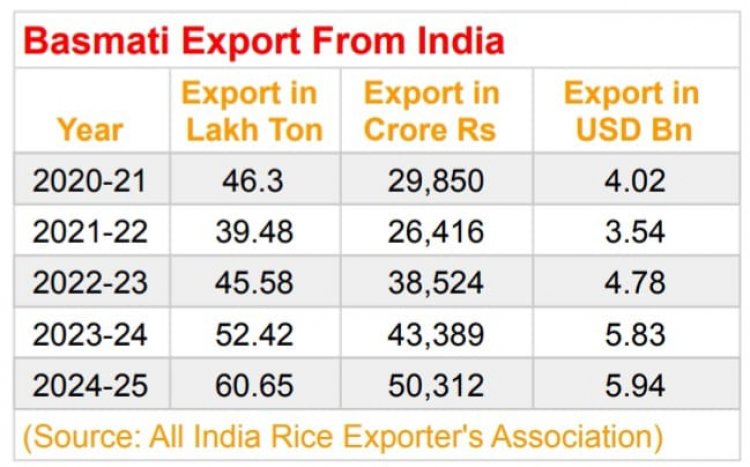
According to the All India Rice Exporters Association, India exported 6.065 million tonnes of basmati rice, worth ₹50,312 crore (about $5.94 billion) in FY 2024-25. Total rice production during the year was 150.1 million tonnes, of which Basmati production was 7 to 7.5 million tonnes. Exports of non-Basmati rice during the same period ranged between 14 and 15.1 million tonnes.
Data from the commerce ministry’s export portal shows Iran’s share in India’s total rice exports in 2024-25 was 6.07%. Saudi Arabia was the largest importer, accounting for 10.61% of India’s total rice exports, valued at $12.47 billion. This was followed by Benin (8.26%), Iraq (6.94%) and United Arab Emirates (4.06%).
In terms of imports, India bought goods worth $408.6 million from Iran, including petroleum coke ($135.7 million), apples ($71.5 million) and dates ($33.3 million).
Exporters estimate that 150,000 to 200,000 tonnes of Basmati rice is currently stuck at various Indian ports, and a similar quantity is in transit. The timing is particularly important, as exports to the Gulf typically peak during Ramadan due to increased demand.
The immediate economic impact of the conflict is being felt through the disruption of the Strait of Hormuz, a key sea route for global trade. A large portion of India’s crude oil and LNG imports pass through this corridor. Any prolonged disruption is likely to increase freight charges and insurance premiums, while higher crude oil prices could further add to domestic inflation pressures.