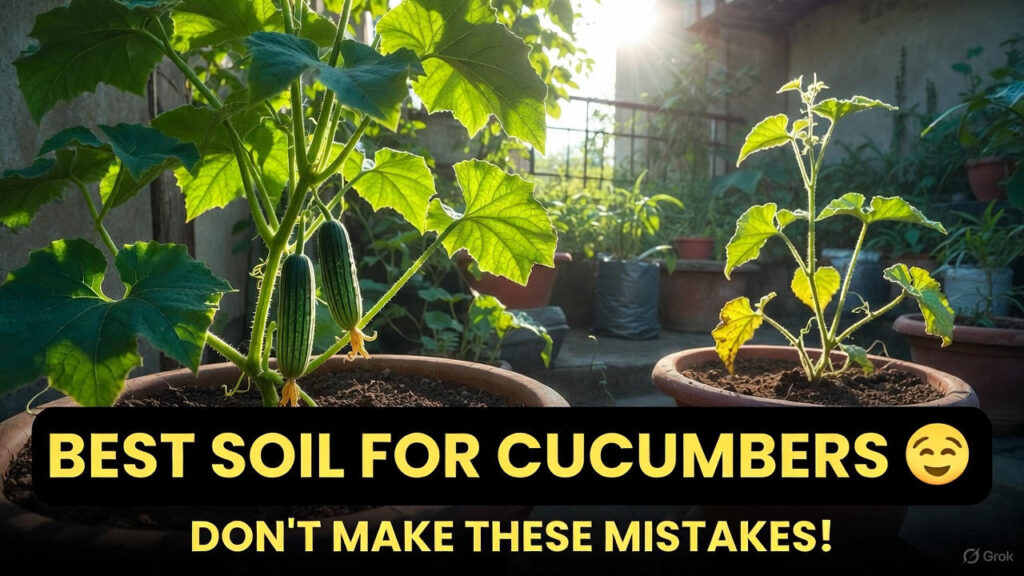
December 23, 2025. I was repotting my third cucumber seedling of the season on my east-facing balcony in Hyderabad when I realised something: every time I fail with potted cucumbers, it starts with the soil. Not bugs. Not sun. The soil. That fluffy bag labelled “all-purpose potting mix” I’d grabbed from the nursery? It held water like a sponge and choked the roots by week three. Fruit never formed.
Most guides tell you cucumbers “like fertile soil”—but that’s useless if you’re growing in a pot. What actually works is a soil mix for cucumbers in pots that drains fast yet stays alive with microbes. I’ve tried everything from 100 per cent vermicompost (disaster) to sand-heavy blends (too lean). The ideal balance is found in the middle. Whether you’re creating your own cucumber potting mix or purchasing pre-made cucumber soil for containers, the objective remains consistent: the soil should be light, loose, and allow ample breathing room.
After losing two crops and finally getting a bountiful harvest this November, I can say these words with confidence—the best soil for cucumbers in pots isn’t about expensive ingredients. It’s about balance. The same goes for ideal soil for cucumbers in containers: it must hold moisture without drowning roots, feed the plant without burning it, and stay airy even after monsoon rains. Getting that right changed everything.
Why Choosing the Best Soil for Cucumbers in Pots Really Matters

Cucumbers don’t care about trellises or the colour of the pot, but they will quickly abandon you if the soil isn’t right. I learnt this during last summer’s heatwave, when my vines looked lush but produced no fruit. Turns out, the potting mix had compacted into a dense mat, starving roots of oxygen.
This section discusses how container soil affects the growth of cucumber roots.
Cucumber roots are shallow but wide, spreading up to 18 inches in favourable conditions. In a cramped or heavy mix, they stall. My first attempt in a 12-inch pot used leftover rose soil—fine for flowers, deadly for cucumbers. Roots barely grew beyond the seedling plug. That’s why loose soil for cucumber roots isn’t just desirable to have; it’s non-negotiable.
Difference between garden soil and potting soil for cucumbers
Garden soil weighs too much for containers. It compacts, drains poorly, and often carries fungal spores. Potting mix is engineered to stay open. When my cousin in Coimbatore tried using backyard soil last rainy season, his seedlings drowned within days. “The pot didn’t even drain after two hours,” he told me. That’s the risk.
Common problems caused by poor soil in potted cucumbers
Yellow leaves, stunted growth, sudden wilt—most trace back to bad soil. I once overloaded a mix with fresh cow dung, thinking, “More manure = more fruit.” Result? The outcome was scorched roots and no flowering. Poor drainage for cucumbers in pots or too much nitrogen from unaged compost can sabotage your whole crop.
What Type of Soil Is Best for Cucumbers in Pots?
I know that sounds backwards—but hear me out. Forget “rich black earth.”. In containers, well-draining soil for cucumbers is king. You want something that feels like a wrung-out sponge—moist but crumbly.
Ideal soil texture for growing cucumbers in containers
The perfect soil texture for cucumbers in containers is light and granular, not sticky or powdery. It should break apart easily when pinched. If it forms a ball that won’t crumble, it’s too dense.
Best soil pH for cucumbers in pots
Cucumbers prefer slightly acidic to neutral pH—between 6.0 and 7.0. Anything below 5.5 or above 8.0 blocks nutrient uptake. I didn’t believe pH mattered—until one cheap meter from the local agri-store explained three months of pale leaves and zero flowers.
I used to guess pH until yellow leaves forced me to test properly. Now I use a ₹120 kit from my local agri-store—and adjust with kitchen-safe fixes like wood ash or lime. For my full low-cost method, see how to test soil pH at home with easy DIY methods.
Why cucumbers need loose, well-draining soil
Their roots rot fast in stagnant water. During Hyderabad’s monsoon, even one day of standing water can invite root rot. That’s why lightweight potting soil with plenty of aeration saves your crop when rains pour.
Best Soil Mix for Cucumbers in Pots (My Proven Formula)

After three seasons of trials, this is the blend that gave me 22 cucumbers off one plant in October 2025:
Basic potting soil recipe for cucumbers in containers
- 4 parts good-quality potting soil (not garden soil)
- 2 parts coco peat (for moisture retention)
- 2 parts well-aged vermicompost
- 1 part perlite or coarse sand
- 1 part dry rice husk (excellent for aeration and cheap!)
Mix thoroughly. Never skip the perlite or husk—my first batch without it turned soggy after two rains.
Best organic soil mix for cucumbers in pots
If you’re going fully organic, replace perlite with pumice or rice husk. Use only aged vermicompost—never fresh manure. I once used compost made from 20-day-old cow dung, and the ammonia levels damaged young roots. Wait at least 60 days.
Use a lightweight soil mix for growing cucumbers on balconies and terraces.
For upper-floor balconies (like mine), weight matters. Skip sand if your building has load limits. Swap in extra coco peat and rice husk. My current mix weighs about half what a sand-heavy one would—and my floor hasn’t complained.
Soil mix adjustments for hot and humid climates
In places like Mumbai or Chennai, add 10 per cent extra perlite or charcoal bits to fight fungal growth. During summer, I also top-dress with dry neem cake—it cools roots and deters pests.
If you’re mixing your own potting blend and want to skip synthetic inputs, I’ve shared the full base recipe I use—including where to source coco peat cheap in Hyderabad—in my guide to the best soil for kitchen gardening DIY potting mix.
For official regional guidance on cucumber soil pH and seasonal timing—especially if you’re gardening in Tamil Nadu’s humid coastal zones—TNAU’s horticulture division breaks it down clearly in their cucumber cultivation guidelines.
Can I Use Garden Soil for Cucumbers in Pots?
Short answer: don’t. But if you absolutely must…
Why garden soil fails in containers
It compacts, lacks drainage, and often contains weed seeds or pathogens. My neighbour tried it last winter—within weeks, white mould covered the surface.
How to improve garden soil for potted cucumbers (if unavoidable)
Only as a last resort: mix 1 part garden soil with 2 parts coco peat, 1 part vermicompost, and 1 part rice husk. But honestly, just buy or make a proper potting mix. Garden soil isn’t worth the risk.
Garden soil vs. potting mixes for cucumber plants
Potting mix is sterile, lightweight, and designed for container life. Garden soil is for gardens. Period.
Drainage Requirements for the Best Soil for Cucumbers in Pots
This isn’t optional. Cucumbers drown fast.
Understanding why drainage is critical for cucumber roots is essential.
Roots need oxygen as much as water. Soggy soil results in suffocated roots, which in turn leads to plant death. I lost an entire batch in July 2024 because I used a pot without drainage holes. Don’t be like me.
How to improve drainage in pot soil for cucumbers
Always add perlite, pumice, or rice husk. Place a layer of broken pottery or gravel at the pot’s base—but never block the hole.
Look for signs of poor drainage in cucumber containers.
Water pools on the surface for more than 10 minutes. Soil stays wet for over 24 hours. The leaves begin to turn yellow from the bottom up. These are red flags.
Good drainage starts with the right base, but if your soil’s already compacted or lifeless, don’t toss it—revive it. I’ve used leaf mold and rice husk to breathe life back into dead mix; the full recovery plan is in how to revitalize old soil and refresh garden soil.
Best Organic Matter to Add to Soil for Cucumbers in Pots
Not all “organic” is equal.
Compost vs. vermicompost for cucumbers.
Vermicompost is finer, more stable, and less likely to burn. Regular compost can be too “hot” if not fully rotted. I now only use 60-day-aged vermicompost—no more scorched roots.
I prefer using coco peat instead of peat moss for my cucumber potting mix.
Coco peat is sustainable, pH-neutral, and holds moisture without waterlogging. Peat moss is acidic and less eco-friendly. In India, coco peat is cheaper and easier to find—go local.
The role of perlite, sand, and rice husk is to improve soil aeration.
Perlite creates air pockets. Coarse sand adds weight but helps drainage. Rice husk? This is my secret weapon. It’s free from most local mills, lasts months, and keeps soil fluffy.
Got leftover kitchen scraps or wondering how much compost is too much? I broke down exact ratios—like the 2:1 mix that saved my monsoon brinjals—in my post on soil-to-compost ratios for garden plants.
For those wanting to go deeper on homemade inputs—like neem cake or biochar—I’ve compiled my favourite low-cost, urban-friendly hacks in DIY organic soil amendments for natural gardening.
Nutrient Requirements of Cucumbers Grown in Pots
Pots run out of food fast.
Cucumbers require essential nutrients in the soil of their containers.
Early on, cucumbers require nitrogen for their leaves, followed by phosphorus and potassium for flowering and fruiting. However, excessive nitrogen results in abundant leaves but no fruit. We experienced this firsthand in May 2025.
This section discusses how soil fertility impacts the processes of flowering and fruiting.
If your vines look healthy but produce no female flowers, your mix is probably too rich in nitrogen. Cut back on compost, add wood ash (for potassium), and wait.
Slow nutrient depletion in pot-grown cucumbers
Even the best nutrient-rich soil for cucumbers fades by week 6. That’s when I start fortnightly doses of diluted banana peel tea or ash water.
Once your soil’s structure is right, feeding matters—especially if you’re avoiding chemicals. My go-to? Banana peel tea and eggshell soaks. I’ve laid out seven homemade recipes that actually work in how to make homemade fertilizer for cucumbers.
Common Soil Mistakes to Avoid When Growing Cucumbers in Pots

I’ve made nearly all of these.
Using heavy or compacted soil
If it feels like mud when wet, skip it. Cucumbers hate it.
Overloading soil with compost or manure
More isn’t better. Stick to 25–30 per cent compost max. Beyond that, salt buildup burns roots.
Ignoring soil pH and drainage
Test pH once a season. And never skip drainage layers.
Reusing old pot soil without conditioning
I reused soil from tomatoes last winter. Big mistake. Cucumbers got fusarium wilt. Now, I solarise old soil in black bags for two weeks in the sun before reusing it.
Reusing last season’s soil without refreshing it was my biggest cucumber killer—until I learned how to safely revive tired mixes. If you’ve got old potting soil gathering dust, check my step-by-step on reusing old potting mix.
Best Soil for Cucumbers in Pots by Pot Size
Size changes everything.
Soil requirements for small pots (10–12 inch)
Use an ultra-light mix: 3 parts potting soil, 2 coco peat, 1 vermicompost, and 1 rice husk. Keep feeding light—small pots dry fast and deplete nutrients quicker.
Soil depth is needed for cucumbers in large containers.
Minimum 12 inches deep. I use 16-inch grow bags now—they encourage deeper rooting and buffer temperature swings.
Raised containers vs. grow bags: soil comparison
Growbags breathe better, preventing overheating. Raised beds hold more moisture. For balconies, I prefer grow bags with my lightweight mix.
Want more yield from that pot? It’s not just about soil—companion planting makes a shocking difference. I started tucking dill and marigolds near my vines last winter, and pollination doubled. Try the proven pairings in companion plants in India.
How to Prepare and Refresh Soil for Cucumbers Each Season

Don’t just dump and go.
How to sterilize and reuse old potting soil
Spread soil on a tarp, cover with clear plastic, and leave in full sun for 10–14 days. Heat kills pathogens.
Refreshing depleted soil for new cucumber plants
Mix in 30 per cent fresh vermicompost and 10 per cent perlite. Add a handful of neem cake to deter soil pests.
When to replace soil completely
Replace the soil completely after two crops, or if you’ve experienced any disease. It’s advisable to be proactive rather than reactive.
Signs Your Cucumber Potting Soil Needs Improvement
Listen to your plants.
Yellow leaves are caused by soil issues.
Often due to overwatering or poor drainage—not lack of nutrients. Verify soil moisture before feeding.
Poor flowering due to incorrect soil mix
Too much nitrogen or low potassium. Hold off on compost; add wood ash.
Root rot and fungal problems caused by toxic soil
Smell sour? Are the roots brown and mushy? That’s root rot. Toss the soil, sterilise the pot, and start fresh.
If your vines look healthy but won’t set fruit, the issue might not be soil—it could be flower balance. I wasted two seasons before learning how to boost female blooms naturally. My full notes are in key rules to increase female and male flowers in cucumbers.
Common Questions About Best Soil for Cucumbers in Pots

1. What is the best potting soil for cucumbers?
The ideal potting soil for cucumbers should be light, well-draining, contain 25–30% organic matter, have a pH of 6.0–7.0, and include perlite or rice husk for aeration. In my experience, anything heavier kills yields in monsoons.
2. How deep should soil be for cucumbers in pots?
The soil should be at least 12 inches deep. Their roots spread wide but need depth to anchor and access moisture. I’ve tried shallower—plants wilted by afternoon.
3. Can cucumbers grow in only compost?
No. Pure compost compacts, drains poorly, and often burns roots. From what I’ve seen on my balcony, even 50 per cent compost is too much without aeration agents.
4. Do cucumbers like acidic or alkaline soil?
The soil should be slightly acidic to neutral (pH 6.0–7.0). Avoid anything below 5.5 or above 8.0.
5. How often should I change soil for potted cucumbers?
Replace completely after every two crops, or immediately if disease appears.
6. Can I use garden soil for cucumbers in containers?
Not recommended. It’s too dense and risky. If you must, amend heavily with coco peat and rice husk—but potting mix is safer.
7. What compost is best for cucumbers?
The best compost for cucumbers is well-aged vermicompost (60+ days old). Avoid fresh manure—it’s too strong.
8. How to improve soil for potted cucumbers?
Add perlite or rice husk for drainage, aged compost for nutrients, and coco peat for moisture balance. Test pH yearly.
Final takeaway
The best soil for cucumbers in pots isn’t bought—it’s built. It’s light, alive, and forgiving enough to survive monsoons yet nourish vines through summer heat. My December 2025 crop is already flowering, thanks to that simple mix of potting soil, coco peat, vermicompost, perlite, and rice husk. No magic. Just balance. And if you see yellow leaves? Don’t reach for fertiliser—check your soil first.