Indian Agricultural Policy and the 2047 Vision: A Growing Disconnect
As India moves steadily toward its ambitious 2047 development goal, a widening gap is emerging between Indian agricultural policy and the ground realities faced by farmers. While crop production has reached record levels, falling market prices, strict inflation targets, limited MSP procurement and a subsidy-heavy budget structure have kept farmer incomes under pressure.
With key budgetary and legal decisions expected in 2026, the government faces a defining choice: continue a consumer-centric policy framework or redesign Indian agricultural policy to focus on fair pricing, diversification and long-term sustainability for farmers.
Farmer-Centric Claims vs Policy Outcomes
The central government, led by Prime Minister Narendra Modi, repeatedly emphasizes that farmers, women, youth and the poor are at the core of governance. This vision is closely tied to the goal of building a developed India by 2047. However, without a meaningful rise in farm incomes, this vision remains incomplete.
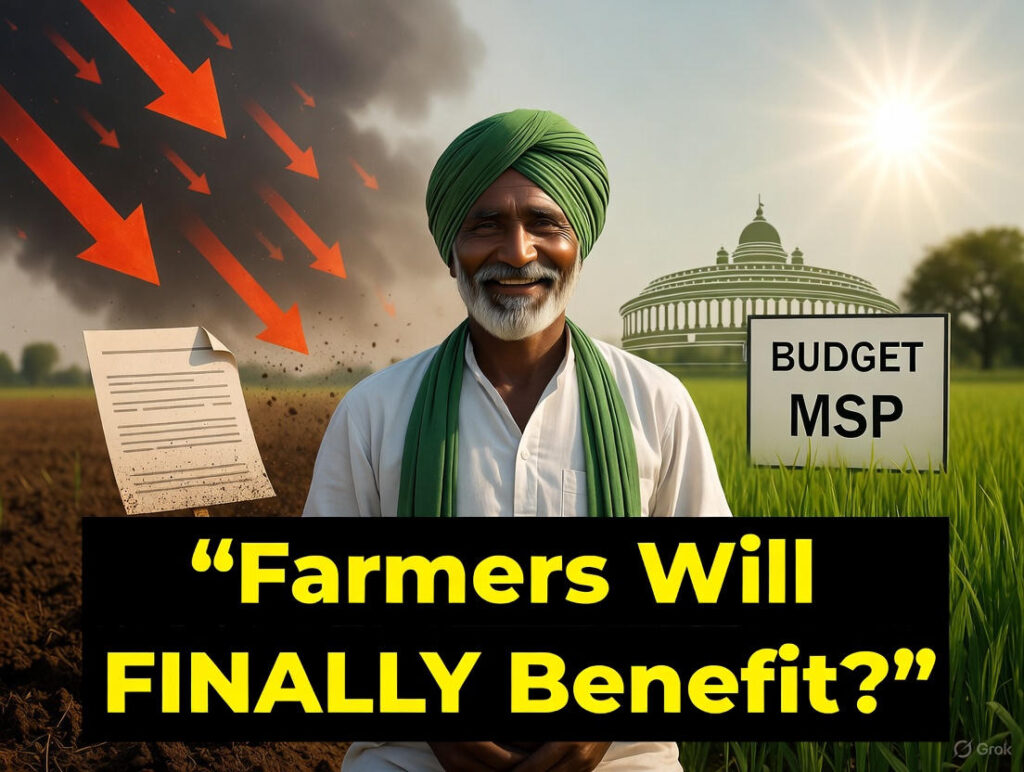
For Indian agricultural policy to deliver real results, a strategic shift is required—away from protecting consumers alone and toward ensuring economic security for farmers. The last few years clearly show that while production has increased, the sharp fall in prices of most agricultural commodities has reduced farmers’ earnings.
Inflation Control and Its Impact on Farmers
One of the key constraints within Indian agricultural policy is the rigid approach to inflation management. Food inflation has remained largely negative, while monetary policy continues to target consumer price inflation (CPI) around four percent. This approach has helped stabilize prices for consumers but has made farmers economically vulnerable.
Unless the government acknowledges this trade-off, meaningful policy reform will remain difficult. Despite official claims that farmer income—not production—is now the focus, current outcomes suggest otherwise.
MSP, Procurement Limits and the Diversification Trap
There are only two sustainable ways to increase farmer income: lowering production costs or ensuring better prices for produce. While the government has raised the Minimum Support Price (MSP) for 23 crops, actual procurement remains limited to a few crops and select states.
As a result, Indian agricultural policy continues to encourage farmers to focus on wheat and rice. This has led to excess stocks in the central pool. However, exporting these stocks is constrained by WTO rules, which restrict exports from subsidized public procurement. This cycle has weakened efforts to promote crop diversification, which requires incentives rather than subsidies.
Budget Priorities and Shrinking Investment Space
A large portion of the agriculture budget is now routed through Direct Benefit Transfer (DBT) schemes. PM-Kisan accounts for the biggest share, followed by interest subvention, crop insurance subsidies and the Agriculture Infrastructure Fund.
After these allocations, very limited funds remain for capital investment, research, innovation and long-term infrastructure—areas critical for strengthening Indian agricultural policy in the long run.
Subsidy Rationalization and Emerging Risks
The government is increasingly using data-driven mechanisms to remove ineligible beneficiaries from welfare schemes. This has already impacted PM-Kisan and interest subsidy programs. A similar approach could soon affect fertilizer subsidies, raising concerns among farmers already facing cost pressures.
Legal Reforms and the Road Ahead
Several legal changes related to agriculture are expected in 2026. The Seeds Bill 2025, which will replace the Seeds Act of 1966, marks a major shift in Indian agricultural policy. Similar reforms may follow for pesticides and fertilizers, though the government is likely to proceed cautiously based on stakeholder feedback.
Why Pricing Reform Is the Key
Despite multiple initiatives, farmer distress will persist unless Indian agricultural policy prioritizes farmers over consumers on pricing decisions. With rising production in some crops and declining global commodity prices, the pressure for concrete policy changes is growing.
Equally important is a comprehensive review of various agricultural missions announced in recent budgets. Without course correction in 2026, the goal of a resilient, farmer-friendly agricultural sector aligned with the 2047 vision may remain out of reach.