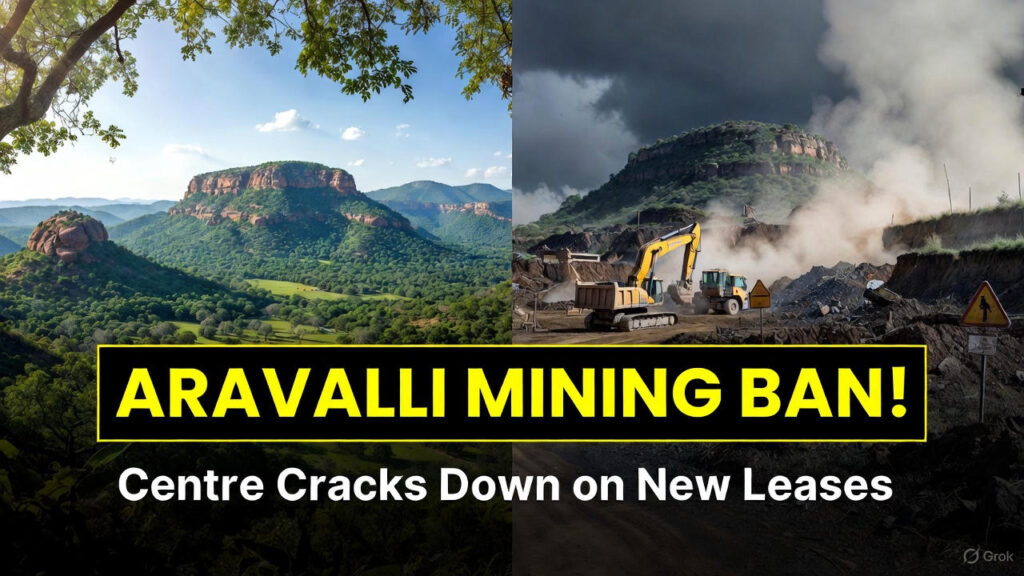
Aravalli Mining Ban Announced by Centre
The Centre has announced a complete Aravalli mining ban, prohibiting the grant of any new mining leases across the entire Aravalli range, stretching from Gujarat to the National Capital Region (NCR). While the government has described the move as a major step toward environmental protection, the opposition has dismissed it as a “fraudulent attempt” at damage control.
The announcement comes amid widespread protests and criticism over the government’s recent redefinition of the Aravalli Hills.
Centre Issues Nationwide Directions on Aravalli Mining Ban
The Union Ministry of Environment, Forest and Climate Change (MoEF&CC) has issued instructions for uniform implementation of the Aravalli mining ban across all concerned states. According to the Centre, the decision is aimed at preserving the Aravallis as a continuous geological ridge and protecting their ecological, environmental, and landscape value from illegal and unregulated mining.
The Aravalli range is one of the world’s oldest mountain systems and plays a crucial role in maintaining ecological balance in northwestern India.
ICFRE Tasked with Identifying No-Mining Zones in Aravallis
As part of enforcing the Aravalli mining ban, the ministry has directed the Indian Council of Forestry Research and Education (ICFRE) to identify additional areas within the Aravalli region where mining should be strictly prohibited. These areas will be added to the zones already restricted by the Centre based on ecological, geological, and landscape-level assessments.
ICFRE has also been entrusted with preparing a science-based Management Plan for Sustainable Mining (MPSM) for the entire Aravalli landscape.
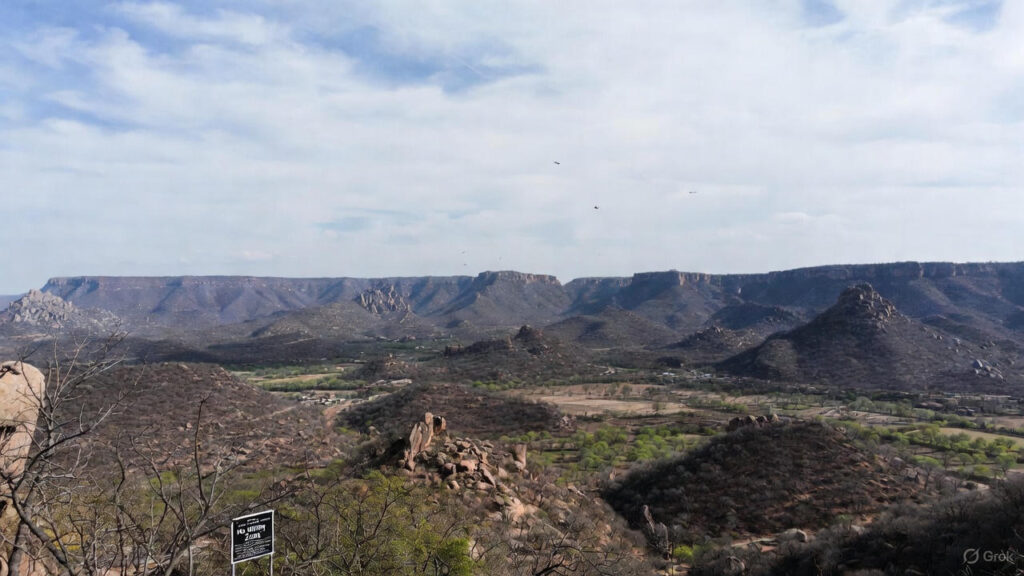
Sustainable Mining Plan to Assess Environmental Impact
The proposed management plan under the Aravalli mining ban will assess cumulative environmental impacts and the ecological carrying capacity of the region. It will identify ecologically sensitive and conservation-critical areas and recommend restoration and rehabilitation measures for degraded zones.
Once finalized, the plan will be placed in the public domain to invite feedback and consultation from stakeholders.
Opposition Criticizes Aravalli Mining Ban Decision
Despite the government’s announcement, the Aravalli mining ban has drawn sharp criticism from the opposition. Congress leader Jairam Ramesh questioned the government’s intent and effectiveness of the measures, calling the move a “bogus attempt at damage control.”
He argued that the government’s controversial redefinition of the Aravallis—particularly the classification of areas beyond 100 metres—remains unchanged, despite objections from the Forest Survey of India, the Supreme Court-mandated Central Empowered Committee, and the Supreme Court’s amicus curiae.
Government Reiterates Commitment to Protect Aravalli Range
The Centre has reiterated that the Aravalli mining ban reflects its long-term commitment to protecting the mountain range, which plays a vital role in preventing desertification, conserving biodiversity, recharging groundwater aquifers, and providing critical environmental services.
According to the ministry, the exercise will significantly expand the coverage of protected and mining-prohibited areas in the Aravallis, taking into account local topography, ecology, and biodiversity.
Existing Mines to Face Stricter Environmental Oversight
For mining operations already underway, the Centre has directed state governments to ensure strict compliance with environmental protection norms and adherence to Supreme Court orders. Under the Aravalli mining ban framework, ongoing mining activities will be closely regulated with additional restrictions to ensure sustainable mining practices and environmental safety.