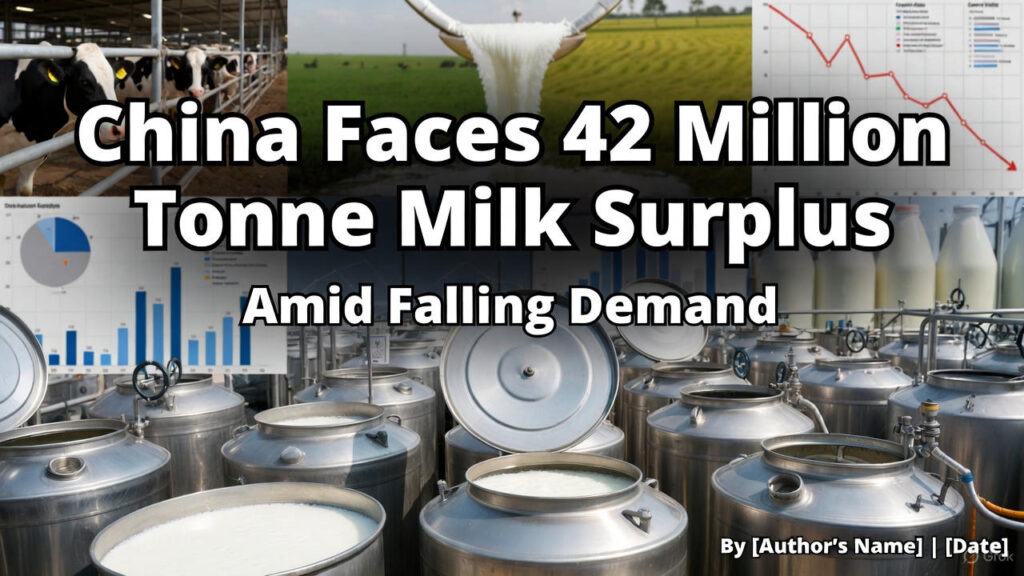
China’s milk production has increased to 42 million tonnes – exceeding the 2025 target – amid a sharp decline in domestic demand. Per capita consumption has decreased due to declining population and sluggish economy. The abundance of raw milk has caused prices to fall below production costs, forcing small farms to close and threatening global dairy trade flows.
China’s dairy industry is facing a huge imbalance between production and consumption, with milk production expected to rise to 42 million tonnes in 2023, while demand continues to weaken. The surplus has emerged as a direct result of Beijing’s drive for food self-sufficiency, which has ramped up production through massive investment in modern farms and the import of high-yield dairy cattle.
Growth has been rapid and sustained: milk production increased from 30.39 million tonnes in 2017 to almost 42 million tonnes in 2023, already exceeding the national target of 41 million tonnes for 2025. However, this expansion has outpaced consumer demand, leading to a structural glut across the region.
China’s per capita dairy consumption has fallen sharply – from 14.4 kg in 2021 to 12.4 kg in 2022. Analysts attribute the decline to a combination of demographic and economic headwinds, including a falling birth rate, aging population and sluggish household spending. These trends have reduced demand for products such as baby formula, cheese and butter, especially among middle-income consumers looking for cheaper alternatives.
Oversupply has led to a sharp decline in raw milk prices, with average production costs falling below 3.8 yuan per kilogram in 2022. This price pressure has squeezed domestic producers, causing many small and medium-sized farms to incur losses, downsize, or close entirely. One of the country’s leading dairy producers reportedly halved its herd in one year to cut costs.
Opportunities for export of surplus milk are limited. China’s high production costs and market distrust stemming from the 2008 melamine contamination scandal have made foreign buyers cautious. Some farms have reportedly begun dumping milk to avoid the additional expense of processing and distribution.
The current scenario also indicates a possible decline in China’s imports of commodities such as liquid milk and milk powder, potentially reshaping global dairy trade flows.
As the world’s second-largest economy grapples with this milk glut, its dairy sector faces a turning point: balancing ambitions of self-sufficiency with sustainable demand and market stability.