Ever killed a money plant because you watered it too much? Yeah, me too. Or maybe you bought one of those fancy “air-purifying” plants from a mall kiosk, only to watch it turn yellow and sad within two weeks because your Delhi flat gets light like it’s rationed? If that sounds familiar, let me tell you about the copper coin plant.
It’s not showy. It won’t climb your walls or flower in rainbow colours. But it will sit quietly on your windowsill, desk, or puja corner and just… grow. No drama. No daily check-ins. And in many Indian homes—mine included—it’s more than just a plant. It’s a symbol of calm, of Lakshmi’s grace, of things staying steady even when life gets messy.
My neighbour in Hyderabad, Sunita aunty, has one in a chipped ceramic bowl near her prayer shelf in her apartment. “It’s been with me since my son left for Canada,” she told me once, wiping her hands on her saree. “I forget it half the time, and still it spreads.” That’s the magic of this little green. It doesn’t need perfect conditions—just a bit of kindness and some shade.
Common Names of Copper Coin Plant
| Scientific Name | Plant Type | Common Names |
|---|---|---|
| Pilea peperomioides | Upright indoor houseplant | • Copper Coin Plant • Chinese Money Plant • UFO Plant • Round Money Plant • Vastu Lucky Plant |
| Hydrocotyle vulgaris (and related spp.) |
Semi-aquatic / ground cover | • Marsh Pennywort • Common Pennywort • Water Naval • Dollarweed • Copper Coin (misused) • Lucky Plant (occasionally) |
| Centella asiatica | Medicinal herb (Ayurveda) | • Indian Pennywort • Gotu Kola • Mandukaparni • Thankuni / Thulkudi |
Copper Coin Plant Basics—What It Is and Why It Works for India

What exactly is a copper coin plant?
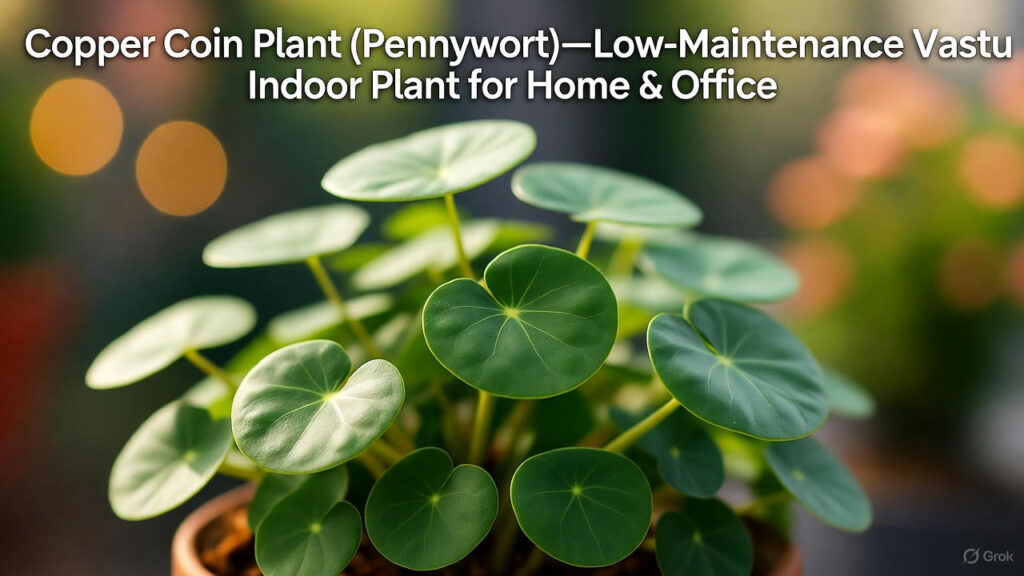
You might’ve heard it called pennywort, jal kumbhi, or even lakshmi patta in some parts. Botanically, it’s Hydrocotyle vulgaris—but honestly, you don’t need to remember that. Just picture small, round leaves, smooth like coins, with a faint coppery glint when sunlight hits them just right. It’s a creeper, not a climber, so it hugs the soil and spreads sideways. Perfect for shallow dishes or wide pots.
Why do so many Indian homes keep it indoors?
Sure, it’s easy—but there’s more. In Vastu, it’s tied to wealth and peace. People place it in the north or east corners, hoping to invite good energy. Even if you’re not superstitious, there’s something soothing about seeing those soft green circles every morning. It’s like a quiet friend who never complains.
Is it the same as ‘money plant’?
No way. The money plant has heart-shaped leaves and climbs like it’s training for the Olympics. Copper coin? It stays low, spreads slowly, and hates dry soil. I once mixed them up in my early gardening days—kept the copper coin in a dry corner like my money plant. It nearly died in ten days. Lesson learnt.
A friend in Bengaluru told me he kept his under the office AC vent, thinking cool air = good. Big mistake. Leaves turned crispy. Moved it near a frosted window with indirect light, kept the soil damp, and within a month? Lush and full again.
In case you miss this: Indoor Gardening in AC Rooms.
Growing Copper Coin Plant Across India’s Diverse Climates

How does it behave in tropical zones like Kerala or Assam?
In places where it rains every other day and the air feels like a warm towel—like Kochi, Guwahati, or Bhubaneswar—this plant thrives almost on its own. You can even tuck it into a shady garden bed or near a small water feature. Just keep it out of the harsh afternoon sun. Monsoon? It’ll spread like gossip. You might need to trim it back.
What about dry, hot areas like Rajasthan or Gujarat?
Here’s where you’ve got to be a little clever. In Jodhpur or Ahmedabad, the air sucks moisture right out of the soil. Keep it indoors. Use a wide pot—15 centimetres across is fine—and water every other day in summer. But never let it sit in water. A nursery guy in Udaipur taught me this: put the pot on a tray with pebbles and a little water. The evaporation keeps humidity up without drowning the roots.
And in temperate hill stations like Shimla or Ooty?
Honestly, it loves it there. Cool temps, gentle light—it’s like a spa for the plant. Just watch out in winter. If it dips below 10°C, bring it inside. Frost will kill it fast. I saw a gardener in Mussoorie lose a whole patch once because he left it out during a surprise cold wave in late November. Sad, but avoidable.
One rule holds everywhere
- No direct sun, no dry soil. Give it shade and steady moisture, and it’ll reward you.
Step-by-Step Guide to Planting and Caring for Copper Coin Plant
Choosing the right container and soil mix
Don’t overthink the pot. A wide, shallow bowl—like those old ceramic ones your grandma used for pickles—works great. Terracotta is ideal, but plastic or ceramic is fine if it’s got a drainage hole.
Soil? Skip heavy garden mud. Mix:
- 2 parts cocopeat
- 1 part river sand
- 1 part compost
Light and airy, it holds moisture but drains well. In cities like Pune or Chennai, you can get cocopeat at any nursery for under 50 rupees a brick.
Watering the right way—no guesswork
This is where most go wrong. The soil should feel like a sponge you’ve just wrung out—not soggy, not dry. In summer, water every 2 days; in winter, every 4–5. Stick your finger in—if the top inch is dry, it’s time.
And don’t pour water from the top like you’re watering a tulsi plant. Water gently at the base, or better yet, use the bottom-watering trick:
- Sit the pot in a tray with 2 centimetres of water for 15 minutes.
- Take it out.
Prevents rot, mimics its natural home.
Light, feeding, and pruning
The pennywort plant required bright, indirect light for its lush growth. North-facing window in Mumbai? Great. Shaded balcony in Kolkata? Perfect. Avoid west or south windows unless you’ve got a curtain.
Feed it lightly:
- Once every 6 weeks from March to September
- With diluted vermicompost tea or liquid seaweed
- Half strength is enough
Too much, and the leaves get pale and weak.
Pruning’s easy: snip off yellow or leggy stems. Toss those cuttings back in the pot—they’ll root and fill it out even more.
How to Propagate Copper Coin Plant at Home – No Expertise Needed!
One of the best things about the Copper Coin Plant (Pilea peperomioides) is that it practically wants to multiply. If you’ve had yours for a few months, you’ve probably noticed tiny “pups” (baby plants) popping up around the base of the main stem. That’s your cue—it’s ready to share!
Here’s the easiest way to multiply your Copper Coin Plant—even if you’ve never propagated anything in your life.
First, just let the baby plant (we call it a “pup”) grow a bit. Don’t rush it! Wait until it’s about 2–3 inches tall and has a couple of its own leaves. If you peek gently near the soil line and see tiny white roots starting to show? Perfect—that means it’s ready to go solo.
Now, ease it out carefully. You don’t need fancy tools—just your fingers (make sure they’re clean) or even a small spoon from your kitchen drawer. Gently wiggle the soil around the pup to loosen it, like you’re helping a sleepy kid out of bed—slow and kind. The goal is to lift it out without yanking or tearing the roots from the mother plant.
Carefully wiggle it free, trying not to damage the mother plant or the pup’s tender roots.
Choose your method:
In water: Pop the pup into a small glass of room-temperature water (filtered or overnight-settled tap water works fine in most Indian cities). Place it near a bright window—but not in harsh afternoon sun. Change the water every 4–5 days. Roots will usually appear in 1–2 weeks.
Direct in soil: You can also plant the pup straight into a tiny pot with well-draining mix (try 2 parts cocopeat + 1 part perlite or sand). Keep the soil lightly moist—not soggy—for the first 10 days.
Pro tip for Indian homes: During peak summer (especially in North & Central India), avoid direct propagation in harsh sun. In monsoon, ensure pots have drainage—Pilea hates sitting in wet soil. And in winter (Delhi, Punjab, etc.), keep new pups away from cold drafts near windows.
Within 3–4 weeks, your new Copper Coin Plant will be ready to gift, place in your office, or add to your Vastu corner. Many of my readers in Bengaluru and Hyderabad tell me they’ve turned one plant into ten in under a year—just by sharing the pups!
Common Urban Challenges and How to Fix Them
Why are my leaves turning yellow?
Usually, it’s too much water or bad drainage. Check if the pot has a hole. If not, repot ASAP. Yellowing can also mean too much sun—move it to a shadier spot.
In case you want to know: Why are My indoor Plant Leaves Yellowing.
My plant looks leggy and sparse—what’s wrong?
Not enough light. Not total darkness, but not good light. Try moving it closer to a window (but not in direct sun). In offices with no windows, a small LED grow light for 4–5 hours helps. A colleague in Gurgaon did this near her desk—within weeks, it bounced back.
It’s growing too fast and spilling over—help!
Honestly, that’s a win! But if it’s messy, just trim the edges. Those cuttings? Give them away in tiny pots. At markets like Crawford Market in south Mumbai or KR Market in Bangalore, vendors sell them for 50–100 rupees. They root so easily.
A gardener in Lucknow told me he uses the extra growth as mulch for his balcony tomatoes. “Breaks down quick, keeps roots cool,” he said. Smart, right?
| Problems | Causes | Solutions |
|---|---|---|
| Yellow leaves | Too much water, bad drainage, too much sun | Repot with drainage hole; move to shade |
| Leggy, sparse growth | Not enough light | Move to brighter indirect light; use LED grow lights. |
| Overgrowth | Healthy plant, excess space | Trim edges, propagate cuttings |
Seasonal Care Calendar for Indian Gardeners

Summer (March–June): Keep it cool and moist
ACs dry the air. Water every 2 days, mist leaves lightly in the morning (never at night—it invites fungus), and keep it away from vents. In hot cities like Nagpur, move it to the coolest room during peak heat.
Monsoon (July–September): Watch for rot, not drought
Too much rain = root rot. If it’s outside, bring it under a porch. Indoors, water less—once every 5 days unless your home’s dry. In humid cities like Kolkata, keep airflow going—open a window or use a small fan.
Winter (October–February): Slow down, but don’t ignore
Growth slows. Water once a week. In North India, protect from cold draughts. In South India, it keeps growing—so you can feed it lightly till December. Winter’s actually the best time to propagate in places like Hyderabad or Chennai—cuttings root faster in cool, moist soil.
A nursery seller in Coimbatore once said, “Winter is when the copper coin plant shows its true strength. If it survives summer and monsoon, winter is its reward.”
| Season | Care Tips |
|---|---|
| Summer (Mar–Jun) | Water every 2 days, mist in morning, keep away from AC vents |
| Monsoon (Jul–Sep) | Water every 5 days, ensure airflow, bring under cover if outside |
| Winter (Oct–Feb) | Water weekly, protect from cold draughts, propagate in South India |
10 Practical Hacks to Grow Copper Coin Plant Like a Pro

- Keep a ‘hospital pot’ for struggling cuttings: Weak or yellow stem? Don’t throw it. Stick it in fresh coco peat, and keep it shaded and damp. Most bounce back in 2–3 weeks. I’ve saved dozens this way in my Telangana test patch.
- Use old tea trays or thalis as planters: No need to buy new pots. Clean stainless steel thali? Perfect. Add a layer of pebbles, then soil. Shallow roots don’t need depth.
- Add a pinch of neem cake to the soil: Feeds slowly and keeps pests away. Huge help in humid cities during monsoon.
- Propagate during Amavasya or a full moon (if it works for you): Old-school gardeners swear by it. I’ve seen faster rooting around Purnima—maybe just higher humidity, but why not try?
- Grow it alongside peace lilies or ferns: Same needs: shade, moisture, and indirect light. Grouping them creates a mini humid zone—less watering for you.
- Use rice water once a month: Save the cloudy water after washing rice. Let it sit a day, then use it to water. My aunt in Vijayawada’s plants are always greener—she credits this.
- Place a small mirror behind the pot: it boosts light in dark corners and, per Vastu, doubles positive energy. Just don’t reflect direct sun onto leaves.
- Avoid plastic wrap or glass domes: Unlike some tropicals, this plant doesn’t need sealed humidity. Trapped moisture = mould.
- Rotate the pot weekly: even indirect light hits one side more. A quarter-turn every week keeps growth even.
- Label your cuttings with matchsticks: Write dates or names on used matchsticks. Stick them in soil. Cheap, biodegradable, always handy.
Top Benefits of Keeping a Copper Coin Plant at Home or Office
- Purifies indoor air naturally: Not as famous as the snake plant, but wetland plants like this do absorb toxins and add oxygen—especially in stuffy rooms.
- Reduces stress and boosts focus: Just looking at greenery lowers stress. Office folks in Pune told me they feel calmer with it on their desk during long calls.
- Low-cost, high-impact decor: for under 50 rupees, you can brighten a dull corner. Pair with a brass bowl—it looks expensive but costs nothing.
- Safe for homes with kids and pets: Non-toxic. If your cat nibbles a leaf or toddler tastes it, no panic. Big plus for Indian homes.
- Encourages mindful watering habits: It shows clear signs of over- or under-watering. Great “starter plant” for beginners learning indoor gardening.
- Symbol of resilience and renewal: In South India, it’s often gifted at housewarmings—not because it’s rare, but because it keeps going. That’s the kind of energy we all need.
Vastu Tips for Copper Coin Plant Placement in Indian Homes

Best directions to place copper coin plant
North (wealth zone) and east (health, new beginnings) are ideal. Living room north corner? Study table on the east side? Perfect.
Where to avoid placing it
Never the southwest corner—it’s for stability, and this plant’s spreading nature clashes. Also, skip bedrooms, especially near the bed. Vastu says it can disturb sleep energy.
Ideal spots in offices and shops
The cash counter or main entrance of your shop invites prosperity. In offices, the left side of your desk (as you sit) is the “wealth area”—a great spot.
Pair it with other Vastu-friendly items
Add a small brass Lakshmi idol, crystal bowl, or even bury a copper coin in the soil. Shop owners in Surat do this every Diwali.
Can you keep it in the bathroom?
Yes—if it’s ventilated and has a window. Bathrooms in the north or east are fine. Humidity helps the plant, and it’s said to clear negative energy from damp spaces.
Final Thoughts—Why This Plant Belongs in Every Indian Home
Let’s be real: the copper coin plant won’t win any beauty contests. It doesn’t flower, it doesn’t smell sweet, and it won’t climb your bookshelf like a money plant. But it will stay green, stay calm, and stay with you—even when you forget to water it for a few days.
It’s survived monsoon floods in my Telangana test plot. It’s thrived under fluorescent lights in a Hyderabad coworking space. It even bounced back after my niece knocked its pot over during Diwali cleaning—soil everywhere, leaves muddy. Two weeks later? New shoots.
That’s the kind of plant Indian homes need: humble, hardy, and full of quiet meaning. So if you’ve been looking for a low-maintenance indoor plant that fits our light, our climate, and our beliefs—give the copper coin plant a try.
You might just find, like Sunita aunty did, that it becomes more than a plant. It becomes a quiet companion through all of life’s comings and goings.