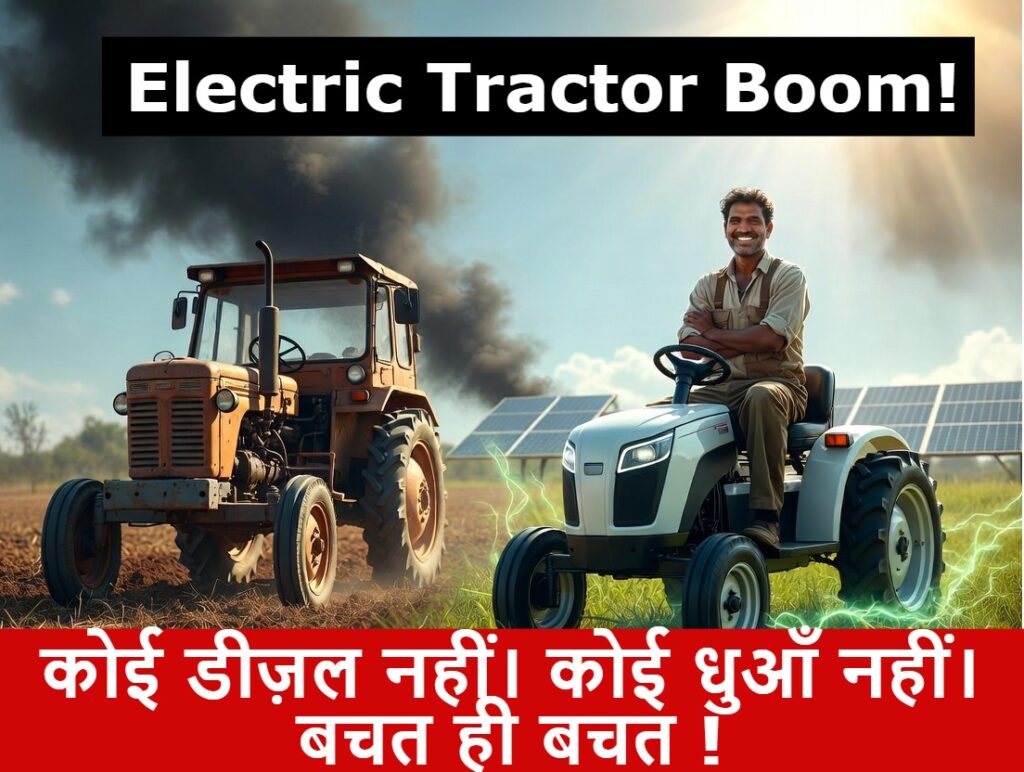
🌾 Electric Tractor Revolution: A Turning Point for Indian Farming
Indian agriculture in 2026 is quietly going through a once-in-a-generation shift. With over 86% of farmers owning less than two hectares, every decision today is about survival — lower costs, less labor, and reliable machines. What was once dismissed as a trial experiment is now reality. The Electric Tractor Revolution has officially arrived on Indian farms.
⛽ Rising Diesel Costs Are Forcing a Hard Choice
One of the biggest triggers behind the Electric Tractor Revolution is diesel. Over the last decade, diesel prices in India have jumped by nearly 65%, eating directly into farmers’ incomes.
A typical 35 HP diesel tractor burns 3.5–4 litres per hour, pushing annual fuel expenses to ₹1.2–1.5 lakh. Electric tractors, on the other hand, run on electricity costing around ₹80,000–₹90,000 per year, delivering 40–45% savings straight away.
With less than 20 moving parts (compared to 200+ in diesel engines), maintenance costs also drop by nearly 30% — a big relief for small farmers.
🚜 Built for Small Farms, Not Big Promises
India’s fragmented farmland needed a rethink — and that’s where the Electric Tractor Revolution fits perfectly.
Most electric tractors today fall in the 25–40 HP range, ideal for 4–6 hours of daily farm work. With 20–30 kWh batteries, farmers can plough, spray, and haul in a single charge. Overnight charging of 6–8 hours fits naturally into rural life without disrupting work schedules.
💰 Government Push Makes Electric Tractors Affordable
Policy support has given the Electric Tractor Revolution a serious boost. By 2026:
- 12+ states offer subsidies up to 30%
- GST reduced to 5% (vs 12% on diesel tractors)
- Priority sector loans with 2–3% interest subvention
For many farmers and cooperatives, this has turned electric tractors from “too expensive” into financially possible.
🌱 Cleaner Farms, Healthier Villages
Agriculture contributes about 14% of India’s total greenhouse gas emissions. A single diesel tractor releases nearly 4.5 tonnes of CO₂ every year.
Electric tractors eliminate tailpipe emissions completely and slash noise levels from 90 dB to under 65 dB. For villages, orchards, and farms near schools and homes, this change is not just environmental — it’s personal.
⚙️ Technology Has Finally Caught Up
Earlier doubts around power and reliability are fading fast. Modern electric tractors now deliver:
- 100% torque at zero RPM (better performance in mud)
- Battery life of 2,000–2,500 cycles (8–10 years)
- Built-in telematics tracking energy use and maintenance
Farmers using these systems report productivity gains of up to 15% — proof that the Electric Tractor Revolution is practical, not theoretical.
👨🌾 Labor Shortage Makes Electric Tractors Essential
With rural labor availability dropping by 20% in the last decade, ease of operation matters more than ever. Electric tractors reduce vibration fatigue by 50%, need less operational skill, and are easier for aging farmers and family-run farms.
This alone is making electric tractors a preferred choice in many regions.
🔮 Why the Electric Tractor Revolution Is Inevitable
As India moves toward 500 GW of renewable energy and expands rural solar power, electric tractors fit perfectly into the future of farming.
By 2026, the Electric Tractor Revolution is no longer optional. It means lower costs, cleaner air, quieter villages, and stronger farm resilience. For millions of Indian farmers, electric tractors are not just machines — they are becoming a lifeline.