India Faces Alarming Future: Extreme Heat Impact on Indian Agriculture Rising Rapidly
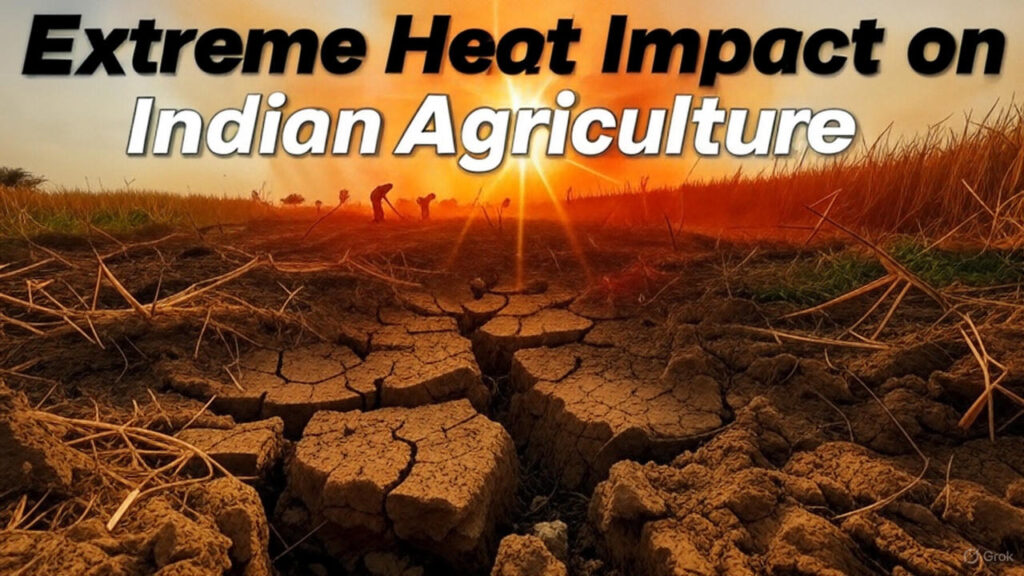
A new United Nations analysis has raised a red flag for the country’s food system. The ESCAP Asia-Pacific Disasters Report 2025: Rising Heat, Growing Risks warns that Extreme Heat Impact on Indian Agriculture is accelerating faster than expected, posing a long-term threat to national food security.
India, home to the world’s largest farming population, is entering an era where rising temperatures will directly reshape crop yields, rural incomes, and food stability.
Key Farming States Moving Toward Near-Permanent Heat Risk
According to ESCAP models, India’s most important agricultural belts—including the Indo-Gangetic plains and the Deccan Plateau—will face a dramatic rise in days crossing severe (35°C) and extreme (41°C) heat thresholds.
The following states are projected to face near-permanent heat risk by 2100:
- Rajasthan
- Uttar Pradesh
- Bihar
- Madhya Pradesh
- Telangana
- Maharashtra
This warning comes after 2024—the hottest year ever recorded—when India battled a prolonged heatwave that caused nearly 700 deaths and widespread agricultural losses.
How Extreme Heat Impact on Indian Agriculture Is Reducing Crop Production
1. Wheat Yield Falling Due to Heat Stress
Temperatures above 35°C during flowering severely reduce wheat productivity.
Heat shocks in 2022 and 2023 slashed yields by 5–8%, a trend expected to worsen.
2. Rice Quality and Yields Declining
High humidity and warm nights in Bihar, Jharkhand, Odisha, and West Bengal are shrinking grain size and lowering production.
3. Maize and Pulses Facing Pollination Disruption
Extended heat spells interfere with pollination cycles, reducing output substantially.
4. Water-Intensive Crops Under Pressure
Sugarcane and cotton are suffering due to rapid moisture loss, with evapotranspiration rising beyond irrigation capacity.
ESCAP notes that days crossing 40°C have doubled in many north and central Indian districts over the last four decades.
Livestock Under Heat Stress: Dairy Production at Risk
The Extreme Heat Impact on Indian Agriculture extends beyond crops. India’s massive livestock economy is struggling:
- Dairy animals eat less and show lower fertility at 30–32°C
- Milk output can fall 10–25% during peak summer
- Heat-related livestock deaths rising in Rajasthan, Gujarat, Maharashtra, Karnataka, Andhra Pradesh
For small farmers, declining dairy income worsens crop losses, deepening rural distress.
Heat Stress Reduces Rural Labour Productivity
Nearly 45% of India’s workforce is employed in agriculture, much of it outdoors.
ESCAP projects that heat-induced loss of work hours will more than double between 1995 and 2030.
Areas most affected during summer:
- Uttar Pradesh
- Bihar
- Telangana
- Tamil Nadu
Reduced labour capacity disrupts sowing, transplanting, and harvesting cycles—directly lowering yields.
Agriculture Infrastructure Struggling Against Heat
Heat is now damaging critical infrastructure essential for food production:
- Irrigation canals and reservoirs losing more water to evaporation
- Power grids failing under peak demand, affecting groundwater pumping
- Cold storage facilities struggling to maintain temperature
- 2024 power outages in Punjab, Haryana, Maharashtra disrupted irrigation during heatwaves
Melting Himalayas Threaten Long-Term Water Security
The UN report also warns that rapidly melting Himalayan glaciers threaten river systems essential for northern India’s irrigation.
Over 9.3 million people live near potentially dangerous glacial lakes, increasing the risk of GLOF events that could damage irrigation systems across Uttarakhand, Himachal Pradesh, and Punjab.
India Must Build a Heat-Ready Agriculture System
UN ESCAP calls for treating heat as a structural agricultural risk, not a seasonal event. India’s current heat advisory system remains limited in coverage.
The report recommends:
- Heat-index-based crop advisories
- Income safety nets for farm labour during extreme heat
- Heat-tolerant seeds and micro-irrigation systems
- Green cooling corridors for arid zones
- Satellite-based heat stress mapping for better planning
A Future of Rising Food Insecurity Without Urgent Action
The UN warns that if the Extreme Heat Impact on Indian Agriculture is not addressed, India may face:
- Falling crop yields
- Rising food prices
- Increasing livelihood insecurity
- Worsening rural distress
Extreme heat is no longer a seasonal challenge—it is becoming a permanent driver of agricultural risk.