Under the Ethanol Supply Year (ESY) 2025-26, only 289 crore liters of ethanol has been allocated from sugar-based feedstocks, which is only 28% of the total requirement, while grain-based ethanol has been allocated 72% (760 crore litres). This comes as the sugar industry has invested over ₹40,000 crore to create over 900 crore liters of ethanol capacity in line with NITI Aayog’s 2020-25-2021 biofuel roadmap.
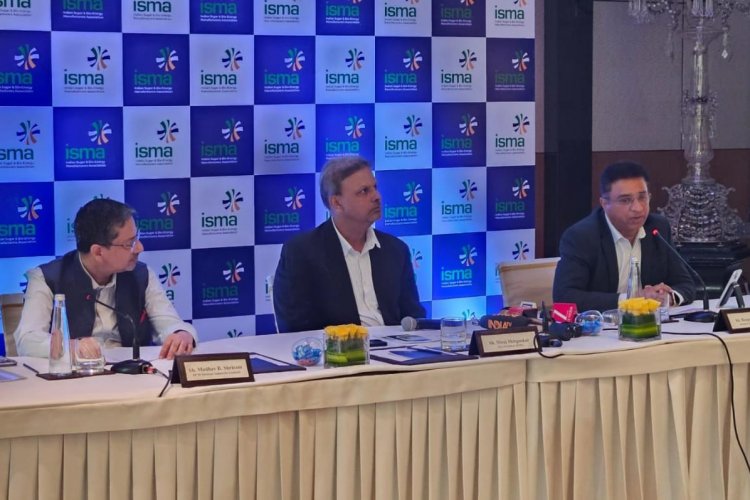
The Indian Sugar and Bio-Energy Manufacturers Association (ISMA) has expressed deep concern that a sharp reduction in ethanol allocation in the sugar sector could lead to under-utilization of distilleries, reduced sugar diversion, surplus stocks and increased cane arrears during the 2025-26 sugar season (SS), ISMA vice-president Neeraj Shivgaonkar said at a press conference in New Delhi on Wednesday. He urged the government to restore preference for ethanol produced from sugarcane juice and B-heavy molasses.
In a presentation to the press, ISMA said that under the Ethanol Supply Year (ESY) 2025-26, only 289 crore liters of ethanol has been allocated from sugar-based feedstocks, which is only 28% of the total requirement, while grain-based ethanol has been allocated 72% (760 crore litres). This is when the sugar industry has invested over ₹40,000 crore to create over 900 crore liters of ethanol capacity, in line with NITI Aayog’s 2020-25 Biofuel Roadmap to 2021, which estimated that the sugar sector will meet about 55% (550 crore L) of the total 1,016 crore liter ethanol requirement to achieve 20% blending (E20). Will contribute. 2025-26.
This imbalance may have led to underutilization of distilleries (less than 50%), shortfall in sugar diversion (~34 LMT), and excess sugar stocks. Additionally, the resulting cash flow crunch may delay payments to farmers and put them at risk of accumulating cane arrears, especially at a time when the sector is already facing low margins and high working capital requirements.
ISMA Director General Deepak Ballani said the government should increase the MSP for sugar, which is Rs 40.20 per kg, based on cost of production. Today the Uttar Pradesh government has increased the State Advised Price (SAP) for sugarcane by Rs 30 per quintal, which will increase the cost of production. We welcome the SAP increase as it is good for sugarcane farmers, but the government should take appropriate decisions to make it viable for sugar mills to pay cane price to farmers on time. SAP increase will give additional Rs 3000 crore to farmers as sugarcane payment.
Ethanol Pricing: Cost-Price Misalignment
While the fair and remunerative price (FRP) of sugarcane has increased by 16.5% from ₹305 to ₹355 per quintal since 2022-23, ethanol procurement prices from sugarcane juice and B-heavy jaggery remain unchanged.
The cost of production of ethanol from B-heavy jaggery is ₹66.09 per liter and from sugarcane juice at ₹70.70 per liter. However, the current purchase prices are ₹60.73 and ₹65.61 per liter respectively, resulting in an unviable price difference of about ₹5 per litre. This persistent shortage is reducing profitability and making ethanol production from sugarcane-based feedstock economically unsustainable. As a result, this is having an adverse impact on the financial health of sugar mills and timely payments to sugarcane farmers.
Minimum Selling Price (MSP) of Sugar: Urgent need for revision
The MSP of sugar remains unchanged at ₹31/kg since February 2019, while the FRP of sugarcane has increased from ₹275 to ₹355 per quintal (2025-26), an increase of about 29%, leading to an increase in the cost of production of sugar, which is now estimated at ₹40.24/kg, resulting in a significant cost-price mismatch.
According to current market trends, domestic sugar prices have already declined sharply and are expected to decline further by December 2025, far below the cost of production. This decline will severely impact the financial liquidity of mills, leading to acute shortage of working capital, delay in cane payments to farmers, increasing cane arrears in the 2025-26 sugar season and increasing financial distress for both mills and farmers.
With expected surplus sugar production against domestic consumption of 285 LMT and diversion of only 34 LMT sugar to ethanol, this will create a glut of sugar in the domestic market, leading to lower sugar prices, increasing liquidity challenges for mills and increasing the risk of cane arrears.
ISMA seeks immediate intervention to mitigate the challenges faced by the sugar industry:
- Rebalance ethanol allocation in line with the NITI Aayog roadmap by ensuring at least 50% share for sugar-based feedstocks to ensure parity and economically acceptable utilization of existing capacity.
- Allocate 150 crore liters of ethanol from sugarcane juice and BHM in the tender for Cycle 2.
- Increase in ethanol purchase prices as per the formula prescribed by the government.
- Increase ethanol blending beyond E20 to higher blends and introduce E100 fuel, supported by the rollout of flex-fuel vehicles (FFVs) and strong hybrid electric vehicles (SHEVs).
- Revision in sugar MSP in line with increased FRP and cost of production.
- Early announcement of sugar export policy for 2025-26 to help manage surplus stocks, plan raw sugar production and maintain liquidity.
ISMA reiterates that timely government intervention through favorable policies to correct ethanol allocation disparity, revise ethanol procurement prices and sugar MSP, and support fair market operations will ensure farmer welfare, regional sustainability and India’s sustained progress towards green energy and net zero goals.