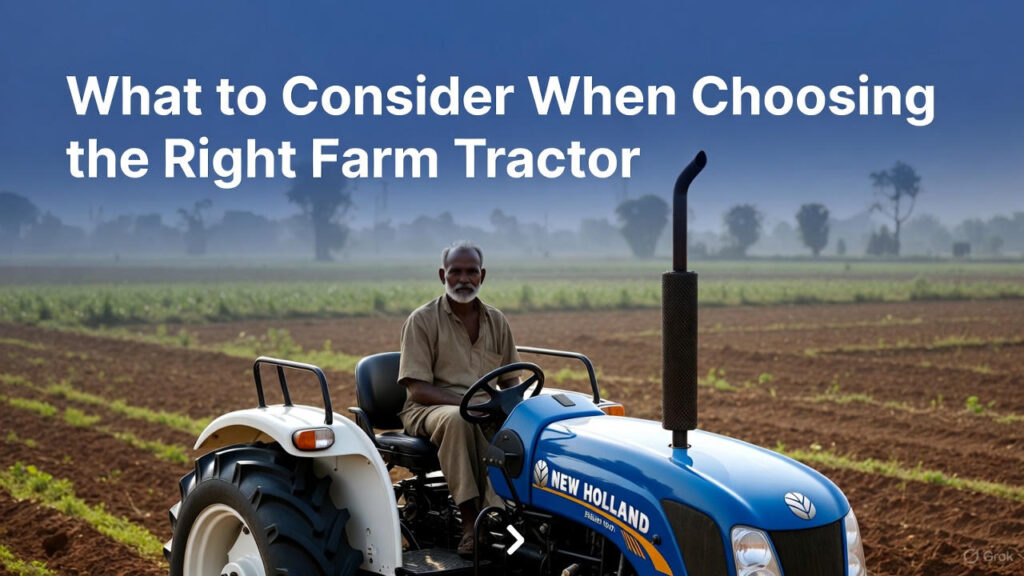
Choosing the right farm tractor can be overwhelming—but you’re not alone. If you’re unsure where to start, it helps to know What to consider when choosing the right agricultural tractorLike the size of your farm, the type of work you will be doing, your budget and even fuel efficiency. We are here to guide you every step of the way so you can make a confident, informed decision that suits your needs. Modern farming has evolved far beyond the days of simple plowing and manual labour.
Today’s agriculture is driven by technology, efficiency and precision – and at the center of it all is the tractor. Whether you’re farming vast hectares of agricultural land or managing a small, diverse operation, choosing the right tractor can have a significant impact on your productivity. With a wide range of models, features and specifications available in the market, how can you determine which one best suits your needs?
Choosing the right tractor is not just about horsepower; It’s about matching machine capabilities to the specific needs of your land and crops. Knowing how to prioritize ensures that each investment in machinery increases the productivity, sustainability and long-term growth of your farm.
Understanding the role of modern tractor

The tractor has long been a symbol of agricultural progress, representing strength, versatility and stamina. But today’s machines are much more than mechanical powerhouses – they are sophisticated devices equipped with advanced technology designed to maximize performance and minimize human effort.
From plowing and planting to hauling and spraying, a modern tractor is built for multitasking. With the rise of precision farming, many models are now equipped with GPS guidance systems, telematics and automation features. These innovations help farmers reduce fuel consumption, reduce overlap during farm operations and ensure consistent crop coverage.
However, technology is only part of the equation. The right tractor should suit your operational scale, soil conditions and the type of equipment you use.
Power and performance: finding the right balance
When most people think of tractors, the first metric that comes to mind is horsepower. Although it is true that power matters, more is not always better. The key is to achieve a balance between performance and efficiency.
For example, small to medium-sized farms may benefit more from a 40-100 horsepower compact tractor, which provides flexibility and maneuverability without excessive fuel consumption. 150-300 hp or more may be required to handle heavy-duty tasks such as plowing large fields or lifting massive loads.
In addition to horsepower, also consider torque and power take-off (PTO) ratings. Torque determines how effectively your tractor can handle tough conditions, while PTO power determines how efficiently it can drive implements like mowers, balers and sprayers. Matching the tractor’s PTO output to your attachment ensures smooth and reliable operation.
Terrain and soil conditions matter
Not all agricultural land is created equal. Soil type, topography and weather patterns should all influence your choice of tractor. If you work in hilly terrain, a model with a lower center of gravity and stronger traction control will provide better stability and safety. In contrast, flat or loamy fields can accommodate different types of tractors.
For heavy clay or wet soil, a tractor with stronger tires or tracks can prevent slipping and soil compaction. For example, tracked tractors distribute weight more evenly, reducing ground pressure and protecting soil structure – an essential consideration for long-term soil health.
The perfect combination of traction, stability and weight distribution allows you to work efficiently in any conditions without damaging your areas or compromising performance.
Comfort, Controls and Ergonomics
Performance metrics often take center stage, but operator comfort plays an equally important role in long-term productivity. Farming often requires long hours in challenging weather conditions. A comfortable cabin equipped with ergonomic controls, air conditioning and sound insulation can make a significant difference to fatigue and focus.
Modern tractors have advanced control systems that allow precise operation and easy access to important information. Intuitive dashboards, adjustable seating arrangements and even suspension systems can make the workday less arduous. Some models also include joystick controls or touchscreen displays for seamless operation.
Operators complete tasks more efficiently and make fewer mistakes in the field when operating a comfortable and intuitive tractor.
Importance of budget and price

It’s easy to get caught up in the latest technology or the most powerful model, but there should always be a balance of capability and cost in purchasing a good tractor. Instead of just focusing on the upfront price, consider the total cost of ownership – including maintenance, fuel consumption, insurance and resale value.
A slightly higher initial investment in a reliable and efficient tractor can yield significant returns over time. Some farmers also explore financing options, leasing or certified pre-owned models to make ownership more accessible without compromising quality.
For in-depth guidance on the factors that should influence your purchasing decision, explore this comprehensive resource on choosing a farm tractor, or better understand locally choose a tractor agricoleIt provides expert insight on comparing specifications, assessing agricultural requirements and understanding the evolving technologies shaping modern machinery,
Sustainability and future-proofing
Sustainability has become a growing priority in modern agriculture. Manufacturers are increasingly designing tractors that consume less fuel, emit fewer pollutants and are integrated with precision farming equipment that reduces waste.
Hybrid and electric tractors are gradually emerging as viable alternatives, providing cleaner and quieter operation. Still in their early stages, these innovations represent the future of farming – where performance meets environmental responsibility.
When choosing your next tractor, consider how well it adapts to future technologies. Models with upgradeable software, connectivity features or modular designs will help ensure that your device remains relevant in a fast-moving industry.
Conclusion: Investing in efficiency and growth
Choosing the right agricultural tractor is one of the most important decisions for a farmer. This is an investment not just in machinery, but in efficiency, sustainability and long-term success. By carefully evaluating power, performance, comfort, maintenance and value, you ensure that your tractor works as hard and smart as you do.
The ideal tractor is not necessarily the biggest or most advanced – it is one that fits seamlessly into your land, your goals and your farming philosophy. From power to precision, the right choice will transform daily operations, reduce workload and ultimately lead your farm to a more productive and sustainable future.
You can find a simple and practical tractor maintenance checklist in this detailed guide to help keep your machine running smoothly throughout the season.