Hello gardeners in India, We present today a step-by-step guide for growing ginger in pots at home and in apartments. If you’ve ever tried to grow ginger at home and ended up with a dry, shrivelled rhizome that refused to sprout or, worse, rotted before you even saw a leaf, you’re not alone. I can’t recall the number of times I’ve overheard my Hyderabadi neighbours complain that their concrete homes aren’t suitable for growing ginger. But that’s just not true. With the right timing, a decent pot, and a little patience, you can harvest fresh, pungent ginger right from your balcony, even if you live in a 2BHK in Mumbai or a ground-floor flat in Chennai.
Ginger doesn’t need acres of land. What it really needs is warmth, good drainage, and protection from harsh sun. And yes, it absolutely thrives in pots. I’ve been growing ginger on my Hyderabad apartment balcony for years, just five large pots tucked near the railing, shaded by a neighbour’s neem tree. One monsoon, I harvested over two kilograms from those five pots. I harvested enough for my daily cooking, a few bottles of ginger pickle, and even some to share with my aunt in Secunderabad.
The secret isn’t fancy equipment; it’s understanding how ginger behaves in our Indian seasons and adapting accordingly. Whether you’re in humid Kochi, dry Jaipur, or chilly Shimla, ginger can work if you time it right and give it what it truly needs.
Choosing the Right Ginger Rhizome
Selecting Quality Rhizomes
Most people grab the cheapest ginger from the local sabzi mandi and plant it straight away. Big mistake. Supermarket ginger, especially in big cities, is often treated with growth inhibitors to stop sprouting during storage. You’ll bury it, water it, wait weeks… and nothing happens. I learnt these lessons the hard way during my first attempt in 2018. Planted three pieces from a popular Hyderabad chain store in April. By July, they’d turned into sad, mushy lumps.
- Look for plump, firm rhizomes with visible eyes, those little knobby bumps where new shoots emerge.
- Buy planting material just before the monsoon, around late May to early June, when fresh, untreated ginger arrives in local markets.
- In smaller towns, ask vendors for vithai vellam (Tamil Nadu) or molaga vithai (Telugu-speaking areas) for untreated stock.
- Avoid wrinkled, lightweight, or overly dry rhizomes.
- Scratch the skin near an eye; a pale green or pinkish tint underneath means it’s alive.
My friend Ramesh in Coimbatore swears by this: go to the weekly shandy (local market) on a Tuesday morning. That’s when farmers bring fresh harvests, and some will even set aside rhizomes with green tips if you tell them you’re planting. He once got five hundred grams for just thirty rupees and grew enough to supply his entire apartment complex’s kitchen for two months.
If you want to go beyond market ginger and pick a high-yielding, disease-resistant variety suited to your state check the official list of improved ginger varieties from the Indian Institute of Spices Research
Best Time to Plant Ginger in India
Timing with the Monsoon
Ginger is a tropical plant that thrives in warm, moist conditions, but it absolutely hates sitting in water. That’s why timing your planting with the monsoon is crucial. In most parts of India, the ideal window is late May to mid-June, just as pre-monsoon showers begin.
- South India (Tamil Nadu, Kerala, coastal Andhra): Start planting last week of May; high humidity and light rains help.
- North India (Delhi, Punjab, UP): Wait until the first week of June, when night temperatures stay above 20°C.
- Arid zones (Rajasthan, Gujarat): Plant in early June with extra shade and mulch; water carefully.
- Don’t plant after August; ginger needs 8–10 months of warm weather to mature.
I tried planting in Hyderabad in March once —a big mistake. The summer heat dried out the soil within hours, and the rhizome baked before it could sprout. I have since learnt not to rush the planting of ginger. It’s not like coriander or spinach that you can sow year-round. Ginger needs that gentle, steady warmth of early monsoon, not the scorching peak of summer or the chill of winter.
Selecting the Right Pot and Soil Mix

Pot Requirements
If the pot doesn’t drain well, ginger roots rot quickly. Many beginners use sleek, bottomless ceramic pots or old buckets without drainage holes, which can lead to disastrous results.
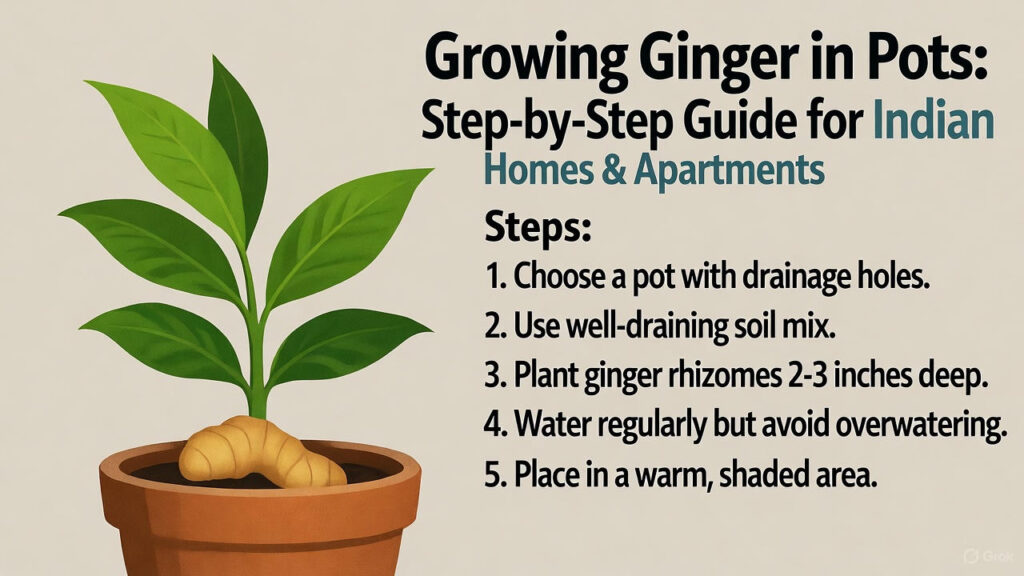
- Choose a pot at least 30 centimetres deep and 30–40 centimetres wide.
- Use terracotta for breathability or sturdy plastic/cement with 3–4 drainage holes.
- Avoid shallow containers; rhizomes spread sideways and need space.
Soil Mix for Success
For soil, forget garden soil alone; it’s too heavy and compacts easily. Instead, mix:
| Component | Proportion |
|---|---|
| Red soil or loamy garden soil | 2 parts |
| Well-rotted cow dung compost or vermicompost | 1 part |
| Cocopeat or fine sand | 1 part |
This mix holds moisture but doesn’t get soggy. On my Hyderabad balcony, I add a handful of rice husks to the bottom for extra drainage, something my grandmother always did in Warangal. One rainy season, my neighbour in Gachibowli used pure cocopea, thinking it was lighter. His ginger grew tall leaves but produced almost no rhizomes; the mix was too airy and lacked nutrients. Lesson: balance is key. Ginger likes rich, loose soil that is moderately dense.
Step-by-Step Planting Process
Preparing and Planting
Start by soaking your ginger rhizome in water overnight. This wakes it up and washes off any surface chemicals. If you’re extra cautious, soak it in a solution of one teaspoon of turmeric powder in one litre of water for 30 minutes; it acts as a natural fungicide.
- Fill your pot with the soil mixture, leaving about five centimetres from the top.
- Place the rhizome eye-side up, about 5 to 7 centimetres deep. Don’t bury it too deep; shallow planting encourages faster sprouting.
- Water gently until it runs out the bottom.
- Keep the pot in a semi-shaded spot; morning sun is fine, but avoid harsh afternoon rays.
In cities like Chennai or Ahmedabad, even the morning sun can be intense in the summer, so a north-facing balcony or under a shaded net works best. Now, be patient. Sprouts can take 2–4 weeks to appear, depending on temperature. Don’t keep digging to check. Water only when the top 2 centimetres of soil feel dry. Overwatering in the first month is the #1 reason ginger fails.
When the first green shoot popped up in my pot last June, it was barely the size of a fingernail. But within three weeks, it was a lush, upright stem with narrow leaves. That’s when I knew it was working.
Seasonal Care Through the Year
Monsoon (June–September)
This is Ginger’s joyful time. It loves humidity and regular rain. But don’t let pots sit in standing water.
- Elevate pots on bricks or stands.
- If rains are heavy (like in Mumbai or Kerala), move pots under a roof or use a temporary rain shield.
- Fertilise once in July with a handful of vermicompost per pot.
Summer (March–May)
Avoid planting, but if you have an established plant, protect it.
- In North and Central India, shift pots to full shade.
- Water in the early morning or late evening.
- Mulch the surface with dry grass or coconut coir to retain moisture.
In Hyderabad, I protect my pots from the intense heat of May by covering them with old jute sacks; this method has proven to be effective.
Winter (November–February)
Ginger slows down but doesn’t die.
- In South India, it keeps growing slowly.
- In North India (Delhi, Punjab, Haryana), temperatures below 15°C can stunt growth or kill the plant.
- Move pots indoors near a sunny window or wrap them in old cloth at night.
- Don’t fertilise during the winter. Water only once every 7 to10 days.
My cousin in Ludhiana once left her ginger pot outside during a December cold wave. The leaves turned yellow and died back. She thought it was over, but in March, new shoots emerged from the rhizome underground. Ginger is tougher than we think, but it still needs protection in extreme cold.
To avoid overwatering during unexpected downpours, I check the India Meteorological Department’s regional monsoon forecasts weekly—especially their 7-day district-level rainfall outlook.
Common Problems and Fixes

Why Your Ginger Isn’t Growing
Even with care, things go wrong. Here are three real issues Indian urban gardeners face and how to fix them:
- Rhizome rotting before sprouting: Usually from overwatering or poor drainage. Use well-draining soil, water only when needed, and never let the pot sit in a tray of water.
- Tall leaves but no rhizomes: too much nitrogen (from fresh manure or chemical fertilisers) or too much shade. Ginger needs balanced feeding and 3–4 hours of indirect sunlight daily. In Bengaluru, a gardener I know added fresh cow dung straight from the shed; leaves grew like crazy, but the rhizomes stayed tiny. After switching to aged compost, the next batch of ginger grew perfectly.
- Yellowing leaves in the rainy season? Don’t ignore it. More often than not, it’s a sign your plant is battling a fungal infection—thanks to all that soggy, waterlogged soil monsoons bring. Here’s what you can do: First, carefully remove the yellow leaves so the problem doesn’t spread. Next, skip the overhead watering—it only makes things worse by keeping the foliage wet. Instead, water gently at the base. And here’s a tried-and-true trick: Scatter a small handful of neem cake around the base of the plant. It’s a natural antifungal, helps keep soil-borne diseases in check, and even feeds the soil as it breaks down. Simple, effective, and straight from the garden wisdom playbook.
Additionally, be vigilant for any pest infestations. The damp, humid weather can invite unwelcome guests like aphids or spider mites. If you spot them, mix 5 ml of mild liquid soap into a litre of water and give your plants a gentle spray in the evening—when the sun’s gone down, so the leaves don’t scorch. This simple remedy usually sends those tiny pests packing.
10 Simple Hacks to Keep Your Potted Ginger Healthy
Practical Tips for Better Growth
Ginger may seem low-maintenance once it’s up and running, but a few small tweaks can make a huge difference in how strong your plant grows and how much rhizome you finally harvest. These aren’t fancy tricks; they’re things I’ve learnt from fellow gardeners, experimented with on my own balcony, and relied on time-tested practices that continue to yield remarkable results.
- Use aged compost, not fresh manure: Fresh cow dung or poultry manure is too hot for ginger; it burns the roots and encourages leafy growth at the cost of rhizome development. Always use well-decomposed compost that’s at least 45 days old. In Telangana, many home gardeners mix compost with a bit of wood ash; it adds potassium and keeps the soil slightly alkaline, which ginger likes.
- Mulch after the first leaves appear: Once your ginger shoots are about 15 centimetres tall, spread a 2 to 3 centimetre layer of dry grass, coconut coir, or even shredded newspaper on the soil surface. This keeps the roots cool in summer, reduces watering frequency, and stops weeds (yes, even pots get tiny weeds!). My neighbour in Banjara Hills uses dried neem leaves as mulch; they slowly break down and add natural pest resistance.
- Water at the base, never from above: Overhead watering splashes soil onto the leaves and leaves them damp, which is a perfect setup for fungal issues like leaf spots. Instead, pour water gently near the stem, keeping the foliage dry. A small watering can with a long spout makes the task easy and precise, especially in tight garden spaces.
- Rotate the pot every few days: ginger stems naturally lean toward the light. If your balcony gets sun only from one side, turn the pot a quarter-turn every 3–4 days. This keeps the plant upright and ensures even growth, which is especially important in narrow city balconies where light is directional.
- Don’t strip all the leaves: Some people pluck ginger leaves for tea or garnish. A leaf or two occasionally is fine, but never remove more than 20% of the foliage. The leaves feed the rhizome underground; less leaf area means smaller harvests.
- Watch for early signs of stress: if leaf edges start curling or turning brown in summer, it’s not always lack of water; it could be salt buildup from bitter tap water. Once a month, flush the pot thoroughly with 2 to 3 litres of water to wash out excess salts. Let it drain completely.
- Use rice water once a week: Do you have any leftover water from rinsing rice? Don’t throw it. It contains starch and trace nutrients that gently feed ginger plants. Let it cool, then use it to water your pot. Many gardeners in Tamil Nadu swear by this; it’s free, gentle, and effective.
- Keep ants away; they bring aphids: if you see insects crawling up your pot, check under the leaves. They’re often farming aphids for honeydew. Wipe leaves with a cloth dipped in diluted neem oil (5 millilitres per litre), and sprinkle a ring of chalk powder or turmeric around the pot’s rim to deter ants.
- Stop feeding after 6 months: Ginger needs nutrients early, but once it’s past the halfway mark (around December if planted in June), stop adding compost or fertiliser. This signals the plant to shift energy from leaf growth to rhizome swelling, exactly what you want before harvest.
- Let the plant rest before harvest: when leaves start yellowing in late winter, reduce watering gradually. Let the soil dry out a bit.
These little habits won’t take extra time, but they add up to healthier plants and tastier, firmer rhizomes. Ginger rewards attention, not intensity. A few mindful minutes a week is all it takes.
Six Real Questions from Indian Gardeners

1. Ginger leaves are growing, but when do I harvest?
Wait at least 8 months. You’ll know it’s ready when the leaves start yellowing and drying up, usually around February–March if planted in June. Don’t harvest early; young ginger is tender but low-yielding.
2. Can I grow ginger indoors with no balcony?
Only if you have a bright window that receives indirect light for 4+ hours will it be ready for harvesting. Full shade = leggy plants and no rhizomes. A south- or east-facing window in cities like Kolkata or Pune can work.
3. Is it okay to use kitchen ginger?
You can use kitchen ginger—but only if it’s fresh, untreated, and has visible eyes. Avoid refrigerated or imported ginger; it’s usually treated and won’t sprout. This is possible only if the ginger is fresh, untreated, and has visible eyes. Avoid refrigerated or imported ginger; it’s almost always treated.
4. How much ginger can I get from one pot?
With good care, a 30-centimetre pot yields 500 grams to 1 kilogram. My five-pot setup in Hyderabad gave me 2.3 kilograms last season.
5. Do I need to replant every year?
Ginger is a seasonal crop. After harvest, start fresh with new rhizomes. Don’t reuse old ones; they’re exhausted.
6. Can I grow ginger in winter in Chennai or Mumbai?
Yes! In South and coastal India, you can plant as late as July–August and still get a decent harvest by next summer. Just protect from heavy rains.
Final Tips for a Bountiful Ginger Harvest
Growing ginger in pots isn’t just possible for Indian apartment dwellers; it’s practical, rewarding, and surprisingly easy once you sync with the seasons. Remember:
- Plant in June, not summer
- Use untreated rhizomes with green eyes
- Prioritise drainage over pot size
- Give indirect light, not full sun
- Don’t overwater, especially early on
- Harvest only when leaves dry; patience pays
That pungent, fresh ginger you pull from your pot tastes nothing like the dry, fibrous stuff from the market. It’s fresher, sharper, and packed with flavour. Plus, there’s a quiet joy in knowing your kitchen spice came from your own hands, even if your farm is just five pots on a Hyderabad balcony.
So go ahead. Grab a rhizome this May, find a pot, and give it a try. You might surprise yourself and your neighbours.