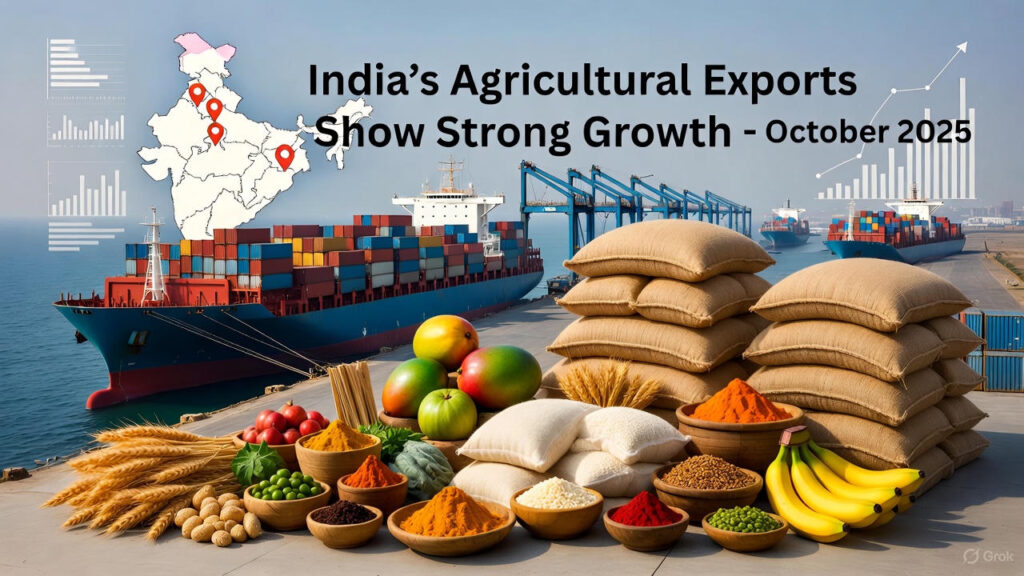
According to the Commerce Ministry, India has secured duty concessions for its agricultural exports under the free trade agreement with the European Union for various products including processed foods, tea, coffee, spices, table grapes, sheep and lamb meat.
This move is expected to help promote exports of these goods to the 27 countries of the European Union, as the concessions will increase the competitiveness of these goods.
Other commodities that will get preferential market access in the EU include cucumbers, cucumbers, sweet corn, dried onions and some other fruit and vegetable products.
“India secures preferential market access for its agricultural exports, thereby enhancing competitiveness,” the ministry said.
It said strategic safeguards are needed for sensitive sectors such as dairy, cereals, poultry, soymeal, certain fruits and vegetables to ensure export growth and protect domestic priorities.
India is not giving any import duty concession on these items as they are under the exclusion list. India has not made concessions in the dairy sector in any of its FTAs signed so far, as it involves the livelihood of small and marginalized farmers.
“The FTA positions Indian agriculture to capture higher prices in European markets, enhance regional prosperity and strengthen long-term resilience through sustained livelihoods and reliable income opportunities,” the ministry said.
It also states that the FTA ensures that goods exported under the agreement undergo sufficient processing or manufacturing to obtain origin status and preferential access.
“The product-specific rules (PSRs) are balanced and aligned with existing supply chains,” it said, adding that these rules will ensure that adequate processing is done in the exporting country while providing adequate flexibility to source inputs from global value chains.
The agreement, which is expected to come into force this year, will reduce compliance time and associated costs for Indian exporters by allowing self-certification through a statement on origin.
“The PSR charts an innovative course by considering the needs of MSMEs by fixing quotas for shrimp and prawn and downstream aluminum products, which will enable MSMEs to access non-origin input sources,” it said.
It said that through digitalization, information sharing and adherence to international standards, the deal reduces trade barriers, facilitates easier market access and strengthens regulatory predictability for exporters.
Under the agreement, the EU will reduce duties on some marine products from the current 0-26 percent, which will help increase exports.
The EU maritime market for imports was ₹4.67 lakh crore ($53.6 billion).
“India’s export potential in the maritime sector currently stands at ₹8,715 crore ($1 billion) to the EU,” the ministry said.
The FTA will promote exports of shrimp, frozen fish and value-added seafood, empowering coastal communities in Andhra Pradesh, Gujarat and Kerala.
The agreement is also likely to boost Indian traditional medical services and practitioners.
In EU countries, where regulations do not exist, AYUSH practitioners will be able to provide their services using professional qualifications acquired in India.
Published on January 28, 2026