The duty-free or low-tariff import of US agricultural products was announced two days after Agriculture Minister Shivraj Singh Chouhan assured Parliament on February 5 that India’s staple grains, fruits, major crops, millets and dairy products are safe and face no threat. | Photo Credit: iStockphoto
According to a joint US-India statement on Saturday, India will eliminate or reduce tariffs on all US industrial goods and a wide range of US food and agricultural products, including dried distillers grains (DDG), red sorghum for animal feed, tree nuts, fresh and processed fruits, soybean oil, wines and spirits and additional products.
Commerce Minister Piyush Goyal listed the items where the US has agreed to reduce its tariff to zero from the current 50 per cent and some others like shrimp where it will impose 18 per cent duty on Indian products.
Goyal said India has protected its domestic producers and industry in products like meat, poultry, genetically modified crops, dairy, sugar soybean, maize, rice, wheat, millet, ethanol, tobacco etc. by not agreeing to open the doors to the US. Listing some products like soya oil, cotton, DDG, apple, he said these would be allowed from the US either with quantitative limits, or at minimum export price or lower duty.
Asked why the joint statement openly used the word “additional products” in the list of items to be imported at concessional rates, he said: “Bilateral talks should continue in the future, which is in India’s interest and should be welcomed by all if there is fair, equitable and balanced trade.” The minister also defended the move to allow DDG, a major source of animal protein used by poultry and animal feed manufacturers. The soybean industry had earlier opposed the move because DDG is a competitor to soymeal.
Goyal said India has agreed to allow a certain quantity of fresh apples from the US at a minimum import price (MIP) of Rs 80 per kg and 25 per cent duty, as against the existing rate of Rs 50 per kg MIP and 50 per cent import duty on other countries. Trade sources said that soon, the MIP could be made uniform for all countries at Rs 80 per kg as was done in the recent trade agreement with the EU.
The minister also said: “We have done a calibrated opening to US agricultural products based on India’s needs.” He said that there are many dry fruits like pistachios, almonds, walnuts which were earlier being imported by India and they will be allowed at zero duty.
The print copy ends here. Please use the entire copy with the text below for online
The statement regarding duty-free or low-tariff imports of US agricultural products comes two days after Agriculture Minister Shivraj Singh Chouhan told Parliament in Parliament that India’s staple cereals, fruits, major crops, millets and dairy products are completely safe and face no threat from imported goods.
business Line The company was the first to report on March 5 last year about a possible concession to the US on allowing soy oil at zero duty among other agricultural products.
India is already importing soybean oil from Brazil, Argentina and Russia as well as the US, with the effective import duty on crude oil being 27.5 per cent and 35.75 per cent on refined oil. However, the share of imports from the US in the total imported soy oil is very negligible. The US is not a large exporter of soy oil because its domestic consumption is too high for both food processing and biodiesel programs, limiting surpluses. But it exports a lot of soybeans, which are genetically modified and not allowed in India.
According to the joint statement, the US will “impose a reciprocating tariff rate of 18 percent” on India’s basic goods, including textiles and apparel, leather and footwear, plastics and rubber, organic chemicals, home furnishing, artisan products and certain machinery, “subject to the successful conclusion of the interim agreement”. There is no mention of “agricultural products” in the list of items on which the US will reduce tariffs.
Apart from this, the experts also said in the joint statement that India has agreed to remove non-tariff barriers especially in food and agricultural products, whereas the US has no such obligation. “It should be closely watched as to which products India has agreed to remove NTBs in,” said a trade policy expert, adding that India has several safeguards in place such as non-GM crops, fumigation of nuts at origin, quarantine protocols in apples, labeling on processed food and additives checking.
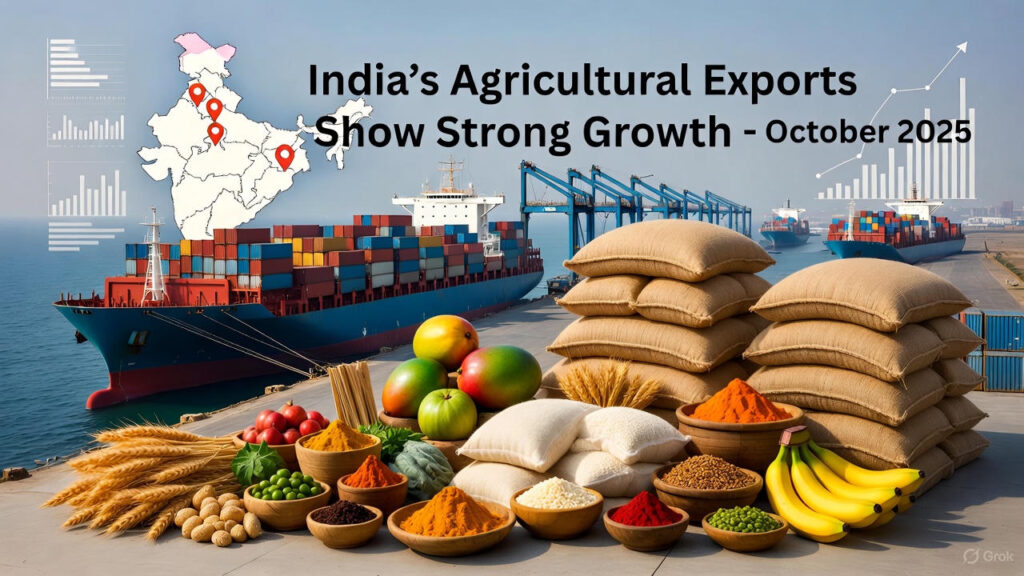
US also has many NTBs like mandatory steam sterilization, FDA pre-clearance, 100 percent inspection in case of spices and peanuts, residue issue in rice, irradiation processes through limited approved facilities for mangoes which create major hurdles in shipments.
Before the US decided to fix country-wise tariff rates last year, and accordingly imposed a 25 per cent duty on India (although the US later increased it to 50 per cent with an additional levy of 25 per cent to prevent India from buying Russian oil), the import duty on Indian agricultural products was 0-9 per cent.
Published on February 7, 2026