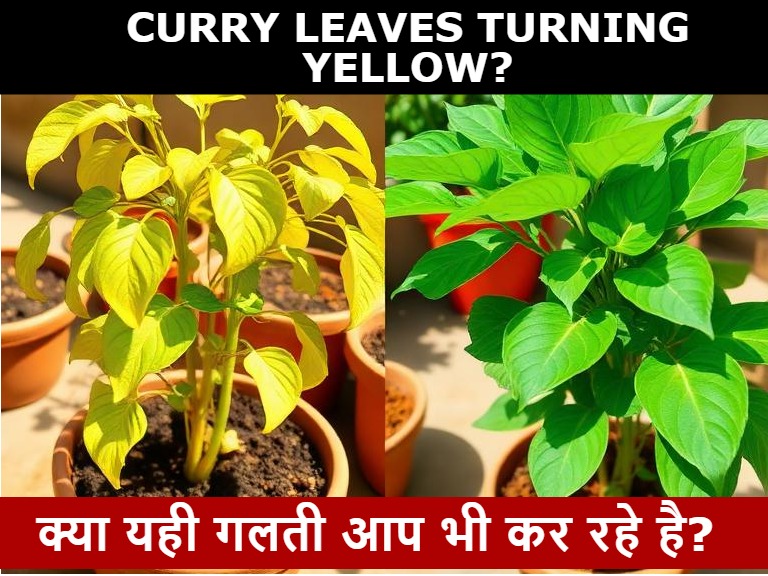
It hit me on the morning of November 12, 2025. I was brewing chai on my Hyderabad balcony when I noticed it—my prized curry leaf plant (kadi patta) looked sick. Not just a few tired leaves, but full-on curry leaves are turning yellow across the top branches. Within days, it got worse: the leaves were fading fast, and not the old ones either. The new shoots came out weak, and the curry leaves turned pale yellow, almost ghostly.
I’ve grown kadi patta for years, but this season felt different. It wasn’t seasonal shedding. This issue with the curry leaves was significant—urgent, confusing, and frankly, embarrassing. My neighbour had just asked for sprigs for her sambar, and I had to say no. That stung. I kept asking myself: Why is my curry leaf plant turning yellow even though it gets morning sun and regular care?
Scrolling through gardening groups didn’t help. Everyone blamed something different—overwatering, bugs, lack of fertiliser. But my soil wasn’t soggy, and I hadn’t touched chemicals in months. Then I saw yellow curry leaves dropping one by one, and I knew I couldn’t wait. The curry leaf yellowing issue wasn’t going away on its own. It was clear that the condition wasn’t just ageing; my curry leaf plant’s yellow leaves were a distress signal.
By November 15, half the foliage looked like autumn had come early. I refused to lose it—especially not after how difficult it was to grow the first one from a grocery store stem in 2023. So I stopped guessing. I started observing. And for the next three weeks, I tracked every drop of water, every change in leaf colour, and even the kind of bucket I used. What I uncovered wasn’t a single fix. It was a chain of small mistakes—plus one big myth I’d believed for too long.
Curry Leaves Are Turning Yellow—What Do Kadi Pattaa Yellowing Leaves Really Indicate?

Natural ageing vs. unhealthy curry leaves turning yellow.
Are the old leaves at the base fading slowly? Totally normal. But if your curry leaves turning yellow are on new growth or spreading fast, your plant’s stressed—not ageing. My curry leaves yellowed from the top down, indicating nutrient or root issues rather than ageing.
When yellow curry leaves are normal and when they signal stress,
In cooler months (Dec–Feb), a few pale leaves are fine—growth slows. But in November in Hyderabad? Not normal. The discrepancy indicated an imbalance, not a seasonal occurrence.
Early warning signs before curry leaves start turning yellow
Watch for a lacklustre shine, stunted new shoots, or leaves that feel paper-thin. A week before the full curry leaves yellowed, mine were smaller and dull. This should prompt you to examine the roots or pH levels before the situation worsens.
Yellow Curry Leaves Pattern Diagnosis: Identifying the Real Problem with Kadi Patta Plant

Older curry leaves first turn yellow due to ageing or nitrogen deficiency.
Bottom-up yellowing often means nitrogen shortage. Nitrogen moves to feed new leaves, abandoning old ones. My friend in Chennai saw this post-monsoon—he’d skipped feeding. A handful of vermicompost brought it back.
New curry leaves turning yellow due to root stress or iron deficiency
Are the fresh leaves emerging while the curry leaves are turning pale yellow? This could be a result of either iron lockout or root damage. I’d been using brittle tap water in a non-draining pot—a classic combo for suffocating roots.
Curry leaves are turning yellow with green veins.
That’s iron or magnesium deficiency. My soil pH was 7.8—far too alkaline. Iron was technically there, but the plant just couldn’t access it—something I didn’t understand at the time.
Curry leaves can turn yellow with spots, indicating pests or fungus, while uniform yellowing suggests issues with water or nutrients.
Spots = pests or fungus. Uniform yellow = water or nutrients. My leaves were evenly pale—no speckles—so I ruled out bugs early.
Common Reasons Curry Leaves Are Turning Yellow
Overwatering causing curry leaves to turn yellow
I did this in 2024—watered every evening “just in case”. In humid Hyderabad, roots drowned. Now I stick my finger in: only water when the top five centimetres are dry.
Underwatering stress leading to yellow curry leaves
The opposite error yields the same result. My aunty in Jaipur lost a plant in May after a family trip. Soil turned to brick. Using dry grass as mulch solved the problem during the next growing season.
Poor drainage is causing the curry leaf plant to have yellow leaves.
Plastic pot, no holes = disaster. I switched to terracotta with three drainage holes and raised it on broken tiles. Night-and-day difference.
Nitrogen deficiency is causing the curry leaves to turn yellow.
Heavy rains wash nitrogen away. I now top-dress with 200 grams of aged cow dung every six weeks after the monsoon.
Iron and magnesium deficiency causing pale yellow curry leaves
I fixed this with a homemade foliar spray: 1 tablespoon Epsom salt + 1 teaspoon lemon juice in 1 litre of rainwater. I applied this solution twice a week. New growth turned deep green in 10 days.
Soil Problems That Cause Curry Leaves to Turn Yellow

An incorrect soil pH is causing the curry leaves to turn yellow.
Kadi patta thrives in pH 6.0–7.0. My test strip showed 7.8—no wonder the leaves of the curry leaf plant are turning yellow. Most shop-bought “garden soil” in India is alkaline.
Alkaline soil prevents curry leaf plants from absorbing iron.
We added neem cake and composted banana peels, which gently acidify the soil and provide nourishment for the microbes. There is no requirement for harsh chemicals.
Micronutrient lockout is causing the curry leaf plant’s leaves to turn yellow.
Hard water + alkaline soil = iron becomes invisible to roots. Switched to stored rainwater, and within about a week, the yellowing stopped spreading.
How to fix soil problems when curry leaves are turning yellow
I wasn’t sure this would work—but I tried it anyway:
- Stopped watering for two days.
- I removed the top five centimetres of the old soil.
- Replace it with 2 parts coco peat, 1 part compost, and 1 part river sand.
- Watered lightly with rainwater
New shoots popped up by Day 12. Honestly, I almost gave up—but I’m so glad I didn’t.
If you’re still figuring out the right mix for your pot, I break down a foolproof container-friendly blend in my guide on growing curry leaf plants in pots and containers—it’s saved three of my balcony plants from yellowing doom.
Curry leaves are turning yellow in potted plants compared to those grown in the ground.

Why do curry leaves turn yellow in pots more quickly?
Pots heat up, dry unevenly, and compact easily. How does my ground-grown neighbor’s plant fare? Never yellowed. Earth buffers temperature and moisture—something pots can’t mimic without help.
Root-bound curry leaf plant causing yellow leaves
Checked mine—roots were circling like a snake. I repotted the plant into a 30-centimetre-wide terracotta pot. Yellowing stopped within a week.
The incorrect soil mix is causing the curry leaves to turn yellow in the containers.
Using pure garden soil in pots can be fatal. It turns solid when dry. I discovered this fact firsthand after losing my first plant.
Curry leaves are turning yellow in both grow bags and balcony gardens.
Growbags dry out crazy fast in the summer. I now line mine with old cotton cloth—it slows evaporation without blocking drainage.
Seasonal Reasons Curry Leaves Are Turning Yellow
| Season | Common Issue | Fix |
|---|---|---|
| Winter (Dec–Feb) | Cold stress, slow growth | Move indoors if temp drops below 10°C; water every 5–7 days |
| Summer (Mar–Jun) | Heat + dry soil | Water early morning; shade from 11 a.m. to a.m.–4 p.m. |
| Monsoon (Jul–Sep) | Waterlogging, fungal rot | Elevate pots, stop watering, and check the bases for mould. |
Curry leaves turn yellow in the winter due to dormancy or cold stress.
In cooler zones like Ooty (USDA Zone 9b equivalent), yellowing in winter is normal. In most of India, sudden yellowing of curry leaves in winter is likely due to cold shock—not dormancy.
Curry leaves are turning yellow in the summer due to heat stress.
I observed this in Indore, where the leaves were scorched yellow by mid-May. A 30% green shade net from 10 a.m. saved the plant.
Curry leaves turn yellow during monsoons due to overwatering.
In Kochi, my friend Meena lost three plants in 2024 because she kept watering during rain. “Rain is enough,” she now says. She lifts pots on bricks—simple but effective.
Sudden weather changes causing curry leaves to turn yellow
An unseasonal cyclone in October 2025 shocked my plant into yellowing. A weekly seaweed extract spray (1 teaspoon per litre) helped it rebound.
Sunlight Issues That Make Curry Leaves Turn Yellow

Excessive sunlight causes curry leaves to turn yellow and become scorched.
Should they be placed on balconies facing west during the summer? Brutal. Rajesh in Indore moved his plant east—and the yellowing stopped.
Insufficient sunlight was causing the curry leaves to become weak and pale yellow.
My cousin in Bengaluru kept hers under a covered stairwell. Leaves were thin, and curry leaves were turning pale yellow. Just four hours of morning sun resolved the issue.
Best sunlight exposure to prevent curry leaves from turning yellow
Ideal: 4–6 hours of gentle morning sun (6 a.m.–10 a.m.), then light shade. Never harsh afternoon sun in March–June.
Curry Leaves Turning Yellow: Indoors vs. Outdoors
Curry leaves are turning yellow indoors due to low airflow.
I tried keeping one in my air-conditioned living room—leaves yellowed in three weeks. Without a breeze, the air becomes stagnant, which increases the risk of fungal growth.
Curry leaves are turning yellow when placed behind glass windows.
Glass magnifies heat, even in winter. South-facing windows can scorch. Use sheer cotton curtains—they diffuse light without blocking it.
How to move curry leaf plants outdoors without yellowing leaves
Harden off slowly: Day 1 – 2 hours outside, Day 2 – 4 hours… By Day 5, the plants should be fully exposed to prevent shock-induced yellowing.
Water Quality Problems That Cause Yellow Curry Leaves
Hard water is causing the curry leaves to turn yellow.
My tap water leaves a white crust on soil. Leaves turned pale, then yellow. After switching to stored rainwater, the yellowing stopped spreading within about a week.
The yellow leaves on the curry leaf plant are caused by salt buildup.
What causes the white crust on the curry leaf plant? Salt. Flush monthly: pour 2 litres of clean water slowly through the pot until it runs clear from the bottom.
Flushing the soil helps when curry leaves turn yellow.
I did this on November 18, 2025. After a week, there was no further yellowing. In most cases I’ve seen (and lived through on my own balcony), it’s overwatering or poor drainage—not lack of water.
Pest and disease issues that cause curry leaves to turn yellow.
Spider mites and aphids are causing curry leaves to turn yellow.
Tiny sap-suckers leave stippled, yellow leaves. I sprayed neem oil (5 ml per litre) every 5 days for two weeks. Gone.
Root rot is causing the curry leaves to turn yellow and wilt.
Smell test: sour, rotten odour = root rot. Cut mushy roots and repot them in the dry mix. While early detection doesn’t guarantee survival, it gives you a better chance.
How to differentiate pests from nutrient-related yellow curry leaves
Pests leave sticky honeydew or webbing. Nutrient issues don’t. My plant had none—so I skipped pesticides and focused on soil.
Curry leaves may turn yellow after repotting or transplanting.
Transplant shock is causing the curry leaves to turn yellow.
I repotted the plant on November 5, and the yellowing of the leaves started on November 7. Totally normal. I gave it shade, no fertiliser, and a little watering.
Why do curry leaves turn yellow after repotting?
Roots get bruised. They can’t absorb water or nutrients well. Don’t fertilise for 3 weeks—let them heal.
The recovery time for curry leaves turning yellow after transplanting varies.
Mine took 18 days to push new green growth. Some plants take longer—just don’t panic and overcorrect.
Curry leaves are turning yellow and falling off.
Stress-related yellow curry leaves are falling off.
When I overfertilised in 2024, half the leaves dropped within 48 hours. Lesson: more isn’t better.
Curry leaves turning yellow and dropping after watering changes.
My neighbour switched to borewell water—leaves fell within days. Water chemistry matters more than we think.
The temporary shedding of yellow curry leaves is normal.
What happens if only a few leaves fall and the new growth appears dark green? It’s just shedding old weight. Let it be.
How I Fixed Curry Leaves Turning Yellow Step by Step
Correct watering schedule to stop curry leaves turning yellow
Now I water only when the top 5 centimetres feel dry. Winter: every 4–5 days. Summer: every 2 days—but only in the morning.
Best soil mix to prevent curry leaf plant yellow leaves
My go-to recipe:
- 2 parts coco peat
- 1 part well-rotted compost
- 1 part coarse river sand
- Small handful of neem cake per pot
Drains fast, feeds slowly, stays slightly acidic.
Natural nutrient correction for yellow curry leaves
- Nitrogen: diluted cow urine (1:10 with water) every 3 weeks
- Iron: lemon and Epsom salt foliar spray
- Magnesium: eggshells soaked overnight, water poured at base
All from kitchen waste—no store runs needed.
For more kitchen-to-pot ideas that actually work (no gimmicks), check out my full list of homemade organic fertilisers to make curry leaf plants bushy and fast-growing—the buttermilk trick alone changed everything.
How to prune yellow curry leaves safely
Only snip fully yellow leaves. Half-yellow ones still feed the plant. I use old scissors that I soak in vinegar; I don’t use any fancy tools.
Recovery Timeline After Fixing Curry Leaves Turning Yellow
How long does a curry leaf take to recover from yellowing?
From November 15 to December 3, the first new shoots will appear. The leaves fully recover by mid-December.
Here’s why yellow curry leaves may not turn green again.
Chlorophyll loss is permanent. But new leaves tell the real story—if they’re green, you’re winning.
Signs curry leaf plant is recovering from yellow leaves
- New leaves deep green
- Stems firm, not floppy
- Buds forming at leaf joints
- No more leaf drop
Mine hit all four by December 10—I used those leaves in my Pongal sambar.
Preventing Curry Leaves From Turning Yellow Again
Weekly care routine to prevent curry leaf yellow leaves
- Monday: check soil dryness
- Wednesday: wipe leaves with damp cloth
- Saturday: pest check under leaves
- Sunday: top up compost if needed
Simple rhythm, big difference.
Seasonal care tips to stop curry leaves turning yellow
- Summer: shade net + morning watering
- Monsoon: elevate pots + no extra water
- Winter: maximise sun and reduce watering
If you’re in South India and want month-by-month planting cues that match local rainfall and temperature swings, the crop calendar from Tamil Nadu’s agricultural university lines up scarily well with what actually works on the ground.
Common mistakes that repeatedly cause yellow curry leaves
- Watering on a calendar, not soil feel
- Using untested bagged soil
- Ignoring water hardness
- I am “helping” by applying excessive amounts of fertiliser.
I’ve made every one. Don’t be like the past me.
Common Myths About Curry Leaves Turning Yellow

The myth suggests that using fertiliser will always resolve the issue of curry leaves turning yellow.
Nope. My overfertilised plant nearly died. Nutrients help—but only if the roots can take them up.
The myth suggests that increased watering prevents yellowing of curry leaves.
More often, it’s the opposite. “Thirsty” leaves can actually mean root rot—roots are drowning, not drying.
The myth that yellow curry leaves mean the plant is dying
Most cases are fixable. Mine looked half-dead on November 12—and by Diwali, I was plucking fresh leaves for sambar.
Common Questions About Curry Leaves Are Turning Yellow
1. Why are my curry leaves turning yellow even after watering?
In most cases I’ve seen (and lived through on my own balcony), it’s overwatering or poor drainage—not lack of water. Check root health and soil dryness first.
2. Can yellow curry leaves turn green again?
No. Once they’ve yellowed, they won’t recover—but new growth will be green if you fix the cause.
3. Should I remove yellow leaves from the curry leaf plant?
Only if the leaves are completely yellow should I remove them. They won’t turn green, and removing them helps the plant focus energy on new shoots.
4. How often should I water a curry leaf plant to prevent yellow leaves?
Water the curry leaf plant whenever the top 5 centimetres of soil feel dry, without adhering to a set schedule. It changes with weather and pot size.
5. Does the curry leaf plant need full sun or partial shade?
The plant thrives best with 4–6 hours of morning sun. Avoid harsh afternoon sun, especially from March to June.
6. Why are curry leaves turning yellow and not growing?
Usually, it’s due to a nitrogen or iron deficiency, or the plant may be root-bound. Repot and feed gently with organic matter.
7. Why are curry leaves turning yellow after repotting?
That’s transplant shock. Give it 2–3 weeks of gentle care: no fertiliser, light watering, and partial shade.
8. What is the fastest way to fix yellow curry leaves naturally?
Please stop overwatering.
You can flush soil with clean water
It is better to spray Epsom salt and lemon mix on leaves
You must ensure morning sun
Most plants show improvement in 7–10 days.
Wrapping Up
If there’s one thing my November 2025 kadi patta crisis taught me, it’s this: yellow leaves aren’t the end—they’re a message. Your plant’s asking for help, not announcing defeat. Skip the panic, skip the chemical fixes, and just pay attention. Because honestly, the best curry leaf care isn’t about perfection—it’s about showing up, getting your hands dirty, and learning as you go. And if my little balcony plant in Hyderabad can come back from the brink, yours can too.