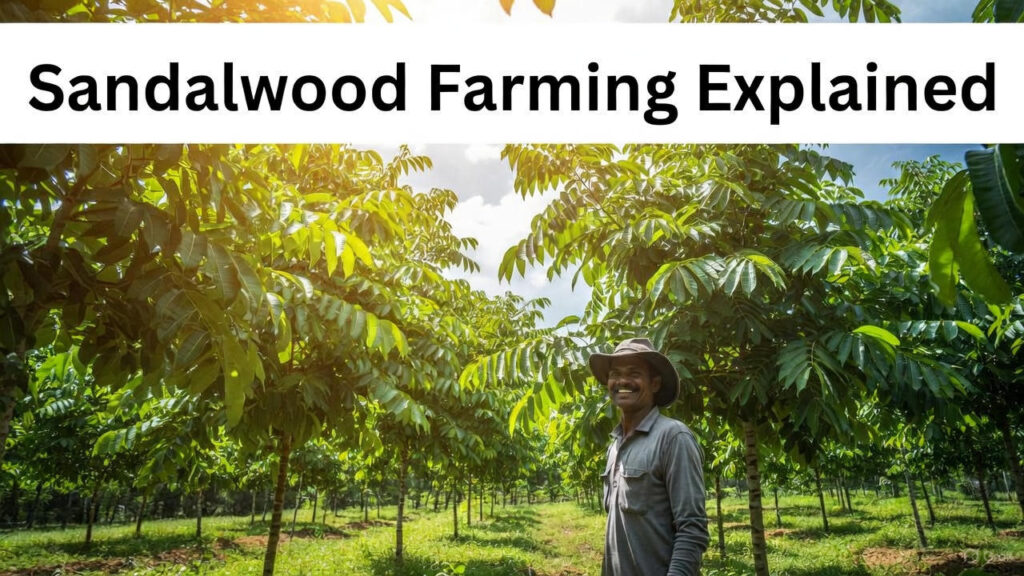
Sandalwood Farming Explained: You can cultivate white sandalwood even on barren land because its plant requires less water. The height of white sandalwood tree can be 18 to 25 feet.
Highlights
- In our country, sandalwood is considered a very sacred wood. It is used extensively in everything from applying tilak in worship to beauty products and perfumes etc.
- White sandalwood can be cultivated all over India. In such a situation, it should be cultivated in those areas where the pH level of the soil is between 6 to 8.5. There should be no waterlogging in the soil.
- It is likely to cost you around ₹1,00,000 to start white sandalwood farming. It will cost ₹25,000 every year to add fertilizer to it.
It is often said about sandalwood cultivation that only 50 trees will make you a millionaire! Today through this article we will tell you
We are going to give detailed information about profitable farming i.e. Sandalwood Farming. How to cultivate it, what things to keep in mind and most importantly, from the permission of the state government to where to contact to sell the crop.
Sandalwood Farming Explained: Demand for ‘Sandalwood’ is huge everywhere
In our country, sandalwood is considered a very sacred wood. It is used extensively in everything from applying tilak in worship to beauty products and perfumes etc. Sandalwood has many medicinal properties. In such a situation, sandalwood is used extensively in Ayurveda. It takes 12 to 15 years for a sandalwood plant to become a tree. In such a situation, if you also want to cultivate white sandalwood in your field, then you should know that one of your white sandalwood trees can be sold for ₹ 700000 after 15 years.
In such a situation, white sandalwood can be cultivated all over India. In such a situation, it should be cultivated in those areas where the pH level of the soil is between 6 to 8.5. There should be no waterlogging in the soil. There should not be snowy areas. Sandalwood plant cannot be cultivated in sandy soil. In such a situation, sandalwood is being cultivated in the northern areas of the country. According to the information, about 400 sandalwood plants can be planted in about 1 acre of land. Sandalwood saplings can be planted at a distance of 12-15 feet. Farmers can also earn additional income by planting other crops in the meantime. Not only this, except the crops requiring more water like paddy and banana, farmers can plant other crops among the white sandalwood.
Sandalwood Farming Explained: Also contributing to environmental protection
According to www.iwst.icfre.gov.in (ICFRE- INSTITUTE OF WOOD SCIENCE AND TECHNOLOGY) Bengaluru, wood has a very important role in the lives of all of us, but the question starts with, how to get good wood. In such a situation, farmers should pay attention to the cultivation of more and more demanding plants to meet the demand for wood along with the environment. In this context, the name of sandalwood cultivation also comes.
Dr.MPSingh IFS, Director ICFRE-IWST inaugurated 5 days training program on “Sandalwood farming and management of its Health” from 11th to 15th September 2023. 35 farmers from different states are participating in the program. pic.twitter.com/h2TOUjuHCX
— ICFRE-Institute of Wood Science and Technology (@IWSTBangalore) September 11, 2023
Sandalwood Farming Explained: How much is likely to cost in farming?
It is likely to cost you around ₹1,00,000 to start white sandalwood farming. It will cost ₹25,000 every year to add fertilizer to it. After about 12-15 years, you will start getting profit on your investment. White sandalwood plants do not require much care. However, in the first year of planting, special care has to be taken of the plant.
You can cultivate white sandalwood even on barren land because this plant requires less water. The height of white sandalwood tree can be 18 to 25 feet. White sandalwood needs a supporting plant to grow. Pigeon pea plant can be a helpful plant for this. That means your income can directly double.
Sandalwood Farming Explained: Red or white, which sandalwood is better to grow?
Although you will find many varieties of sandalwood, but red and white sandalwood are most popular in India. Before starting sandalwood cultivation, almost everyone is confused about which variety to plant.
Know about white sandalwood
1. White variety true sandalwood (Santalum album).
2. White sandalwood is a highly valued tree because of its aromatic oil.
3. Oil extracted from white sandalwood is used in soap and perfume industry.
4. Its wood is used for handicrafts and medicinal preparations.
5. White sandalwood can be harvested in commercial plantations in 15-20 years.
Know about red sandalwood
1. The red sandalwood variety is from another family and is called red sanders (Pterocarpus Santalinus).
2. Its production is very less.
3. Red sandalwood contains no aromatic oil. It is valued for its rich red wood color and use in traditional medicines. Its wood is used in musical instruments, furniture, handicrafts and as a flavor enhancer in alcoholic beverages.
4. Red sandalwood takes longer (50-60 years) to mature than white sandalwood.
5. From commercial point of view, white sandalwood is more profitable than red sandalwood and is preferred by farmers. The information given in this article is about white sandalwood or Santalum album.
Government is motivating farmers
According to www.farmatma.in website, India once produced about 4000 metric tons of sandalwood, which was global sandalwood and sandalwood oil. But, due to the erosion of sandalwood forests in the 1970s, the amount of sandalwood decreased. India’s sandalwood production has declined to only 400 metric tons. The price of sandalwood oil has doubled during 2017-2022. This market is expected to reach US$ 165 million or Rs 1200 crore by the end of 2027.
State and central governments are encouraging farmers to cultivate sandalwood. The largest producer of sandalwood oil and sandalwood products, government-owned Karnataka Soaps and Detergents Ltd., which makes the famous Mysore Sandal Soap, has started contract farming with farmers.
There is no problem in distribution of sandalwood, as the government itself facilitates the sale. Farmers are not allowed to sell sandalwood directly to oil producers or consumers. After getting permission from the forest department, the trees are uprooted. After this the wood is auctioned by the State Forest Department. Payment is made to the farmer after deducting 20% as harvesting and processing charges. Farmers get the remaining 80% of the auction price.
At present, the government rate of heartwood is around Rs 6500-7500 per kg and the price of sandalwood oil is around Rs 150,000 per kg. The retail price of sandalwood in the domestic retail market is around Rs 16,000-20,000 per kg. This rate is increasing by about 25% year-on-year. International market rates are 15-20% higher than domestic rates. The price of sandalwood in the domestic market can be Rs 45,000-60,000 per tonne.