Declining sugarcane yields and slow variety replacement have put both farmers and the sugar industry in crisis. ISMA has urged ICAR to convene a special meeting of the Variety Identification Committee (VIC) to expeditiously approve the new Co-20016 variety.
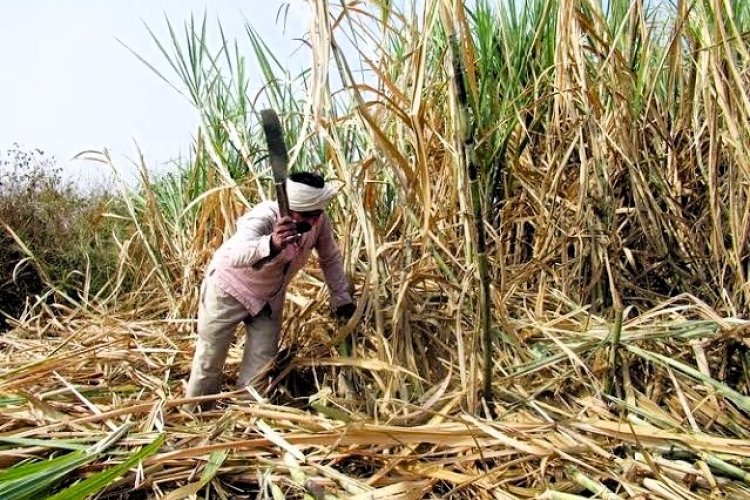
India’s largest sugarcane producing state, Uttar PradeshSugarcane is facing a serious availability crisis as disease outbreaks and adverse weather conditions have affected crop yields, creating new challenges for sugar mills and deep financial stress for farmers.
With production declining, mills across the state are struggling to ensure adequate cane supply for crushing, while growers have reported significant income losses due to reduced productivity. Industry stakeholders say the only sustainable way out of the crisis is the rapid dissemination of improved and disease-resistant sugarcane varieties.
Association of Private Sugar Mills, Indian Sugar and Bio-Energy Manufacturers Association (ISMA) has stepped up efforts to speed up the approval of a promising new variety. However, procedural formalities are slowing down the process.
Find alternative to Co-0238
The widely cultivated and once high-performing Co-0238 variety has become increasingly disease-prone, prompting farmers to seek alternatives. In response, research institutes under Indian Council of Agricultural Research (ICAR) is working on replacement options.
Sugarcane Breeding Institute A new variety, Co-20016, has been developed in Coimbatore, which has shown encouraging results in multi-location trials. Scientists and industry representatives consider it a potential replacement for Co-0238, with better performance than many existing varieties.
ISMA is now pushing for early approval of Co-20016 to ensure timely availability to farmers.
Call for special VIC meeting
According to industry sources, ISMA has written a letter to ICAR Director General Dr. ML JatHe urged them to call a special meeting of the Diversity Recognition Committee (VIC) as soon as possible. The objective is to secure notification of Co-20016 before the start of planting season 2026-27, thereby enabling commercial cultivation without any delay.
under the guidelines of All India Coordinated Research Project (AICRP), full results for two plant crops and one tree crop are expected to be available by April 2026. However, under the present system of ICAR, the VIC meeting for sugarcane is usually held in October or November. This means formal approval for Co-20016 could be delayed until November 2026, pushing back notification and commercial rollout by nearly a year.
Therefore ISMA has requested ICAR to hold a special VIC meeting in June or July 2026 to specifically consider Co-20016. Industry representatives argue that this could lead to savings of about a year in different types of production and help improve productivity at a time when the sector is under pressure.
The issue of rapid identification and release of improved varieties was also discussed in a meeting between ISMA and Joint Secretary (Sugar) on February 9, sources said.
mills started closing early
The wider sugarcane belt, especially in Uttar Pradesh, is struggling with old varieties, delayed replacement of varieties, lag in seed multiplication systems and increasing disease incidence. These structural weaknesses exacerbate the effects of climate stress.
Due to inadequate cane availability and competition from crusher and khandsari units, 18 of the state’s 120 sugar mills had stopped crushing operations by February.
As of February 28, total sugarcane crushing in the state stood at 737 lakh tonnes, compared to 766 lakh tonnes during the same period last year. Industry sources indicated that due to further reduction in sugarcane supply, most of the mills in Uttar Pradesh may close operations by the end of March.
The unfolding situation highlights the urgent need for rapid variety replacement, streamlined regulatory processes and a strong seed multiplication framework to safeguard both farmer incomes and mill operations in the country’s largest sugar producing region.