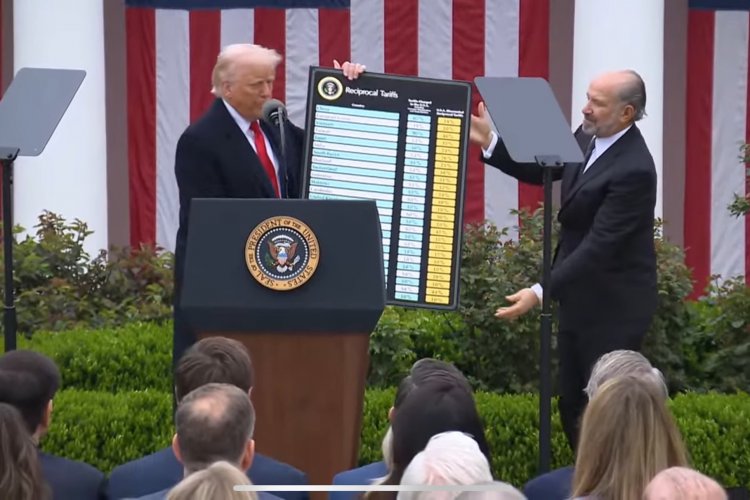
The US Supreme Court has struck down President Donald Trump’s sweeping “Liberation Day” global tariffs in a 6-3 decision, finding that he exceeded his authority by imposing a national emergency law without Congressional approval.
Big shock to the President donald trumpAs part of the economic agenda, the US Supreme Court has rejected his sweeping “Liberation Day” global tariffs, ruling that he exceeded his authority by imposing them under a law reserved for national emergencies.
By a 6-3 majority, the justices held that Trump improperly relied International Emergency Economic Powers Act To impose a comprehensive import tax in 1977 without congressional approval. The Court explained that although the statute allows the President to regulate certain economic transactions during a declared emergency, it does not authorize the imposition of unilateral tariffs. The power to tax imports, the court insisted, rested with Congress.
check on executive power
This decision represents an important judicial check on the broad use of executive authority. Trump, a longtime supporter of tariffs, argued that taxing imported goods would boost American manufacturing, reduce the trade deficit and strengthen domestic industry.
Many in the business community, as well as Trump’s political opponents, rejected that argument, and warned that the tariffs would raise costs for companies and consumers while disrupting global supply chains.
The court’s decision applies specifically to so-called “Liberation Day” tariffs – sweeping tariffs imposed on goods from a wide range of U.S. trading partners. It does not affect separate, country-specific or product-specific tariffs enacted under other statutory authorities.
Financial markets reacted quickly. Wall Street rose in early trading after the decision, reflecting investor optimism that lowering trade barriers could reduce uncertainty and improve global trade flows.
impact on india
The decision could have a meaningful impact on India, one of the major trading partners of the United States. If the “Liberation Day” tariffs include comprehensive duties affecting Indian exports, sectors such as pharmaceuticals, engineering goods, textiles, auto components and information technology hardware could benefit from reduced trade friction.
Indian exporters faced high compliance costs and pricing pressures under the comprehensive tariff regimes. The court’s decision could improve predictability in US trade policy, a key factor for long-term supply contracts and investment planning.
However, any India-specific or product-specific tariffs imposed under different legal provisions will remain unaffected. Trade experts say the decision could create space for more structured, Congress-backed trade talks between Washington and New Delhi rather than unilateral executive actions.
How did the matter reach the court?
The Supreme Court upheld earlier lower court rulings that Trump had violated his authority. The legal challenge was brought by businesses affected by the tariffs as well as by 12 US states, most of which are governed by Democrats. He argued that the President’s unprecedented use of emergency legislation to impose a sweeping import tax violates the constitutional separation of powers.
The decision is expected to shape future debate over presidential power in trade policy and may influence how emergency economic laws are interpreted in the years to come.