The interim India-US trade agreement opens India’s market to select US agricultural products through duty cuts and import facilitation, except for staple food items like wheat, rice and dairy. However, increased imports of DDGS, soybean oil, fruits, nuts and cotton could lead to losses for oilseeds, fruits and cotton farmers, raising concerns over farm income and self-sufficiency goals.
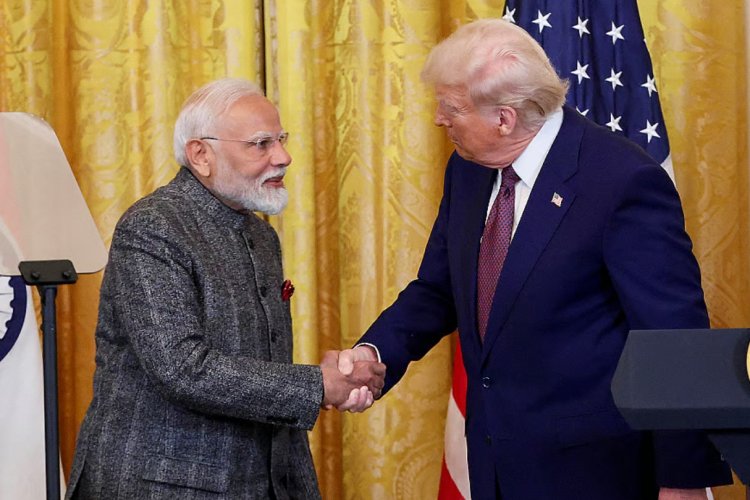
After a week of intense developments, the interim draft of the India-US trade agreement was finally released on the morning of February 7. The deal follows discussions between Prime Minister Narendra Modi and US President Donald Trump about a year ago. While the government has repeatedly said that India’s agriculture sector will be unaffected, the draft shows that this assurance was only partially true.
The agreement clearly states that India will open its market to a range of US agricultural products by offering customs concessions and reducing non-tariff barriers. In return, the United States has agreed to reduce reciprocal duties imposed on Indian goods to 18%.
Click here to watch the video of this news
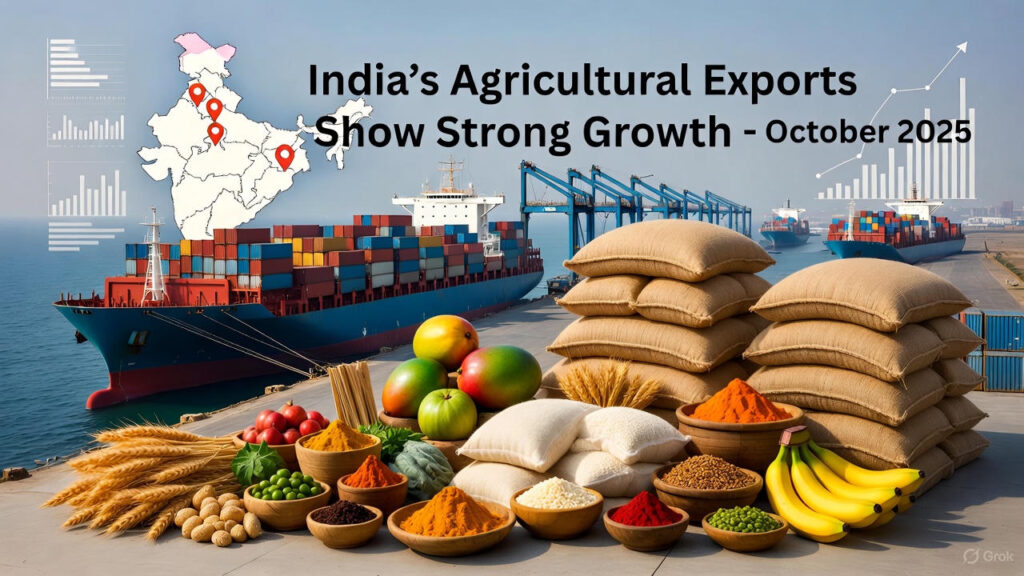
The interim agreement includes a detailed list of agricultural commodities, which was first published by the US White House after midnight and later officially released by India. These products include dried distillery grain solubles (DDGS), soybean oil, tree nuts such as almonds, walnuts and pistachios, fresh fruits including apples and berries, processed fruits, cotton, red sorghum for animal feed and other commodities. Import of these products will be facilitated through lower customs duties, zero-duty access for select items and tariff rate quotas (TRQs). The agreement also covers wines, spirits and non-alcohol beverages.
The government has clarified, and the draft confirms this, that key food items such as sugar, dairy and poultry products as well as wheat, rice and maize are excluded. India’s production of wheat, rice and sugar easily exceeds domestic demand, and the country is the world’s largest exporter of non-Basmati rice at competitive prices. With wheat stocks improving, the government has already begun to ease restrictions, allowing the export of 500,000 tonnes of flour and related products and recently lifting stock limits. The protection of the dairy and poultry sectors remains a strategic priority.
The real concern is about other agricultural products. The Union Budget has simultaneously emphasized diversification towards high-value agriculture and plantation crops, many of which are included in the India-US trade agreement. India currently exports about $6 billion worth of agricultural goods to the US, while imports from the US are about $3 billion, giving India a surplus of about $3 billion in agricultural trade.
However, imports from the US are set to increase by more than 30% in 2025 alone. Tree nut imports, especially almonds and pistachios, are set to increase by 34% to $1.3 billion by November 2025. The duty concessions under the agreement are likely to accelerate this trend. Similarly, lower tariffs and ease of access to apples and other fresh fruits will have a direct impact on domestic apple growers.
One of the most important inclusions is DDGS, a protein-rich by-product of ethanol production from corn and other grains, which is widely used in animal and poultry feed. Underscoring the scale of potential imports, the US exports approximately 12 million tons of DDGS annually. While the dairy and poultry sectors can benefit from cheaper feed, soybean farmers face direct competition, as DDGS replaces soybean meal.
Its consequences have already happened. In the last two years, soybean farmers have struggled to get the minimum support price (MSP), mainly due to falling prices of soybean meal due to DDGS imports. Soybeans contain only 18% oil, the rest is processed into food. Soybean is cultivated in about 13 million hectares in India, mainly in Madhya Pradesh, Maharashtra and Rajasthan. Farmers in these areas are the biggest losers under the agreement.
Soybean oil is another sensitive item. India imports more than 60% of its edible oil requirements, of which soybean oil accounted for 4.8 million tonnes in the last oil year (November 2024 to October 2025). Currently, soybean oil attracts a customs duty of 16.5%, and imports are largely from Argentina, Brazil and Russia. Preferential access to subsidized US soybean oil could further reduce domestic oilseed prices.
This comes at a time when India is striving for self-reliance through the National Mission on Edible Oil and Oil Palm. Encouraging imports is contrary to this objective. A similar paradox exists in cotton. Domestic cotton production has fallen from a peak of 39.8 million bales to about 30 million bales. Allowing subsidized imports from the US will further weaken farm-gate prices and hurt Indian cotton growers.
The final list of agricultural products may expand once the detailed tariff schedule and TRQ limits are released. But the broader strategic context is already clear. America’s target is to export goods worth $100 billion to India annually. Bilateral trade currently stands at about $130 billion, with India enjoying a surplus of about $40 billion. Washington aims to reduce and eventually eliminate this imbalance, potentially bringing total trade to $200 billion.
In an era of geopolitical uncertainty, excessive reliance on a single trading partner carries risks. India already sends more than 20% of its exports to the US. In contrast, China has gradually reduced its dependence on the US market. This diversification explains why Beijing was ultimately able to compromise when the US imposed reciprocating tariffs.